-
Sale!
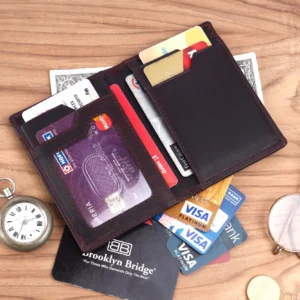
RFID Protected Pull Strap Wallet for Cards & Cash
Original price was: $41.90.$15.19Current price is: $15.19.
You save -
Sale!
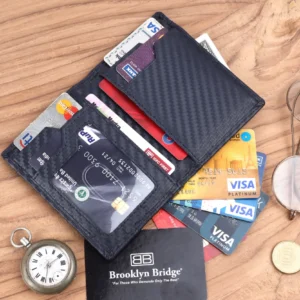
RFID Protected Pull Strap Leather Card Holder Wallet
Original price was: $41.90.$15.19Current price is: $15.19.
You save -
Sale!
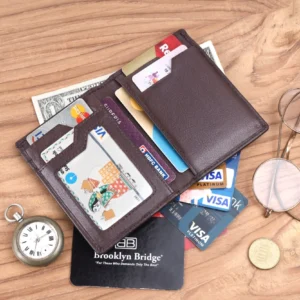
RFID Protected Pull Strap Card Holder Wallet for Men Slim
Original price was: $41.90.$15.19Current price is: $15.19.
You save -
Sale!
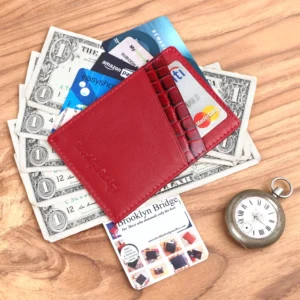
RFID Protected Leather Card Holder Wallet for Men & Women
Original price was: $18.10.$6.39Current price is: $6.39.
You save -
Sale!
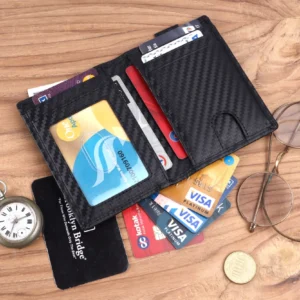
RFID Protected Pull Strap Card Holder Wallet for Secure Access
Original price was: $40.70.$14.79Current price is: $14.79.
You save -
Sale!
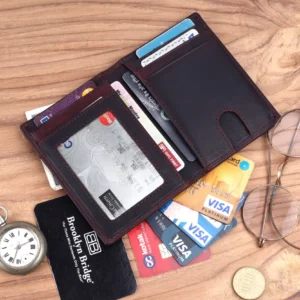
Slim RFID Protected Pull Strap Wallet for Cards & Cash
Original price was: $40.70.$14.79Current price is: $14.79.
You save -
Sale!
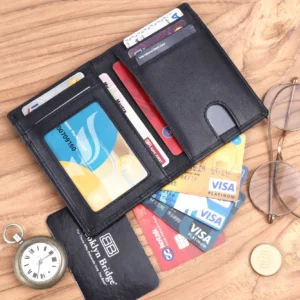
RFID Protected Pull Strap Card Holder Wallet for Daily Use
Original price was: $40.70.$14.79Current price is: $14.79.
You save -
Sale!
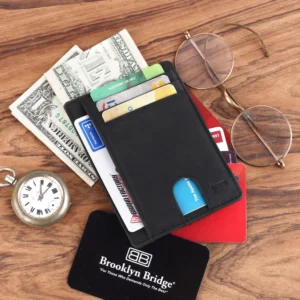
RFID Protected Card Holder Wallet for Secure Cards & Cash
Original price was: $27.30.$10.79Current price is: $10.79.
You save -
Sale!
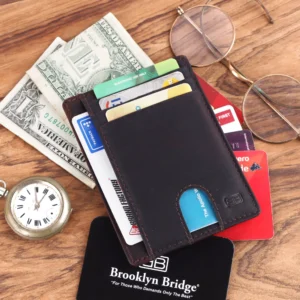
RFID Protected Leather Card Holder Wallet with Slim Design
Original price was: $27.30.$10.79Current price is: $10.79.
You save -
Sale!
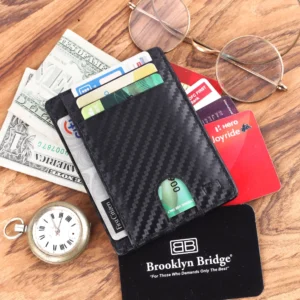
Slim RFID Protected Leather Card Holder Wallet for Cards
Original price was: $27.30.$10.79Current price is: $10.79.
You save -
Sale!

RFID Protected Leather Card Holder Wallet for Secure Cards
Original price was: $27.30.$10.79Current price is: $10.79.
You save -
Sale!
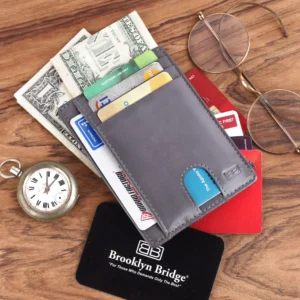
RFID Protected Genuine Leather Card Holder for Daily Use
Original price was: $27.30.$10.79Current price is: $10.79.
You save
-
Sale!
RFID Protected Pull Strap Wallet for Cards & Cash
Original price was: $41.90.$15.19Current price is: $15.19.
You save -
Sale!
RFID Protected Pull Strap Leather Card Holder Wallet
Original price was: $41.90.$15.19Current price is: $15.19.
You save -
Sale!
RFID Protected Pull Strap Card Holder Wallet for Men Slim
Original price was: $41.90.$15.19Current price is: $15.19.
You save -
Sale!
RFID Protected Leather Card Holder Wallet for Men & Women
Original price was: $18.10.$6.39Current price is: $6.39.
You save -
Sale!
RFID Protected Pull Strap Card Holder Wallet for Secure Access
Original price was: $40.70.$14.79Current price is: $14.79.
You save -
Sale!
Slim RFID Protected Pull Strap Wallet for Cards & Cash
Original price was: $40.70.$14.79Current price is: $14.79.
You save -
Sale!
RFID Protected Pull Strap Card Holder Wallet for Daily Use
Original price was: $40.70.$14.79Current price is: $14.79.
You save -
Sale!
RFID Protected Card Holder Wallet for Secure Cards & Cash
Original price was: $27.30.$10.79Current price is: $10.79.
You save -
Sale!
RFID Protected Leather Card Holder Wallet with Slim Design
Original price was: $27.30.$10.79Current price is: $10.79.
You save -
Sale!
Slim RFID Protected Leather Card Holder Wallet for Cards
Original price was: $27.30.$10.79Current price is: $10.79.
You save -
Sale!
RFID Protected Leather Card Holder Wallet for Secure Cards
Original price was: $27.30.$10.79Current price is: $10.79.
You save -
Sale!
RFID Protected Genuine Leather Card Holder for Daily Use
Original price was: $27.30.$10.79Current price is: $10.79.
You save
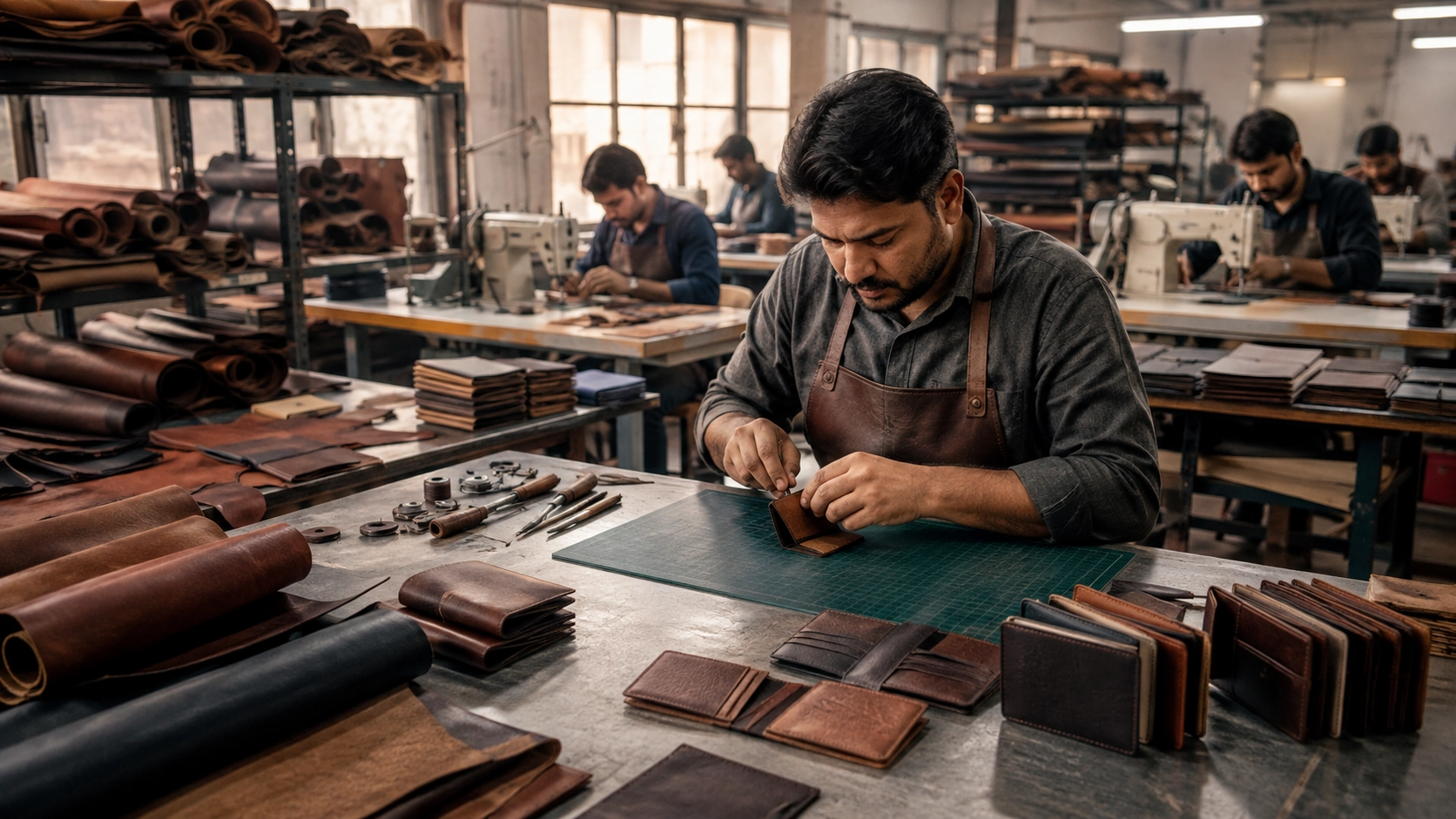
Table of Contents
Leather Wallet Exporter from India to Switzerland: Complete B2B Buyer Guide
Swiss buyers expect leather wallets to deliver more than an attractive appearance. Material consistency, precise stitching, functional design, dependable supply, and transparent commercial terms all influence purchasing decisions. For importers, retailers, wholesalers, and private-label brands, choosing the right manufacturing partner is therefore a strategic decision.
India offers opportunities for sourcing leather wallets across different designs, materials, price segments, and order volumes. However, a successful sourcing partnership requires careful supplier evaluation, product specification, sample approval, cost planning, and preparation for Swiss import procedures.
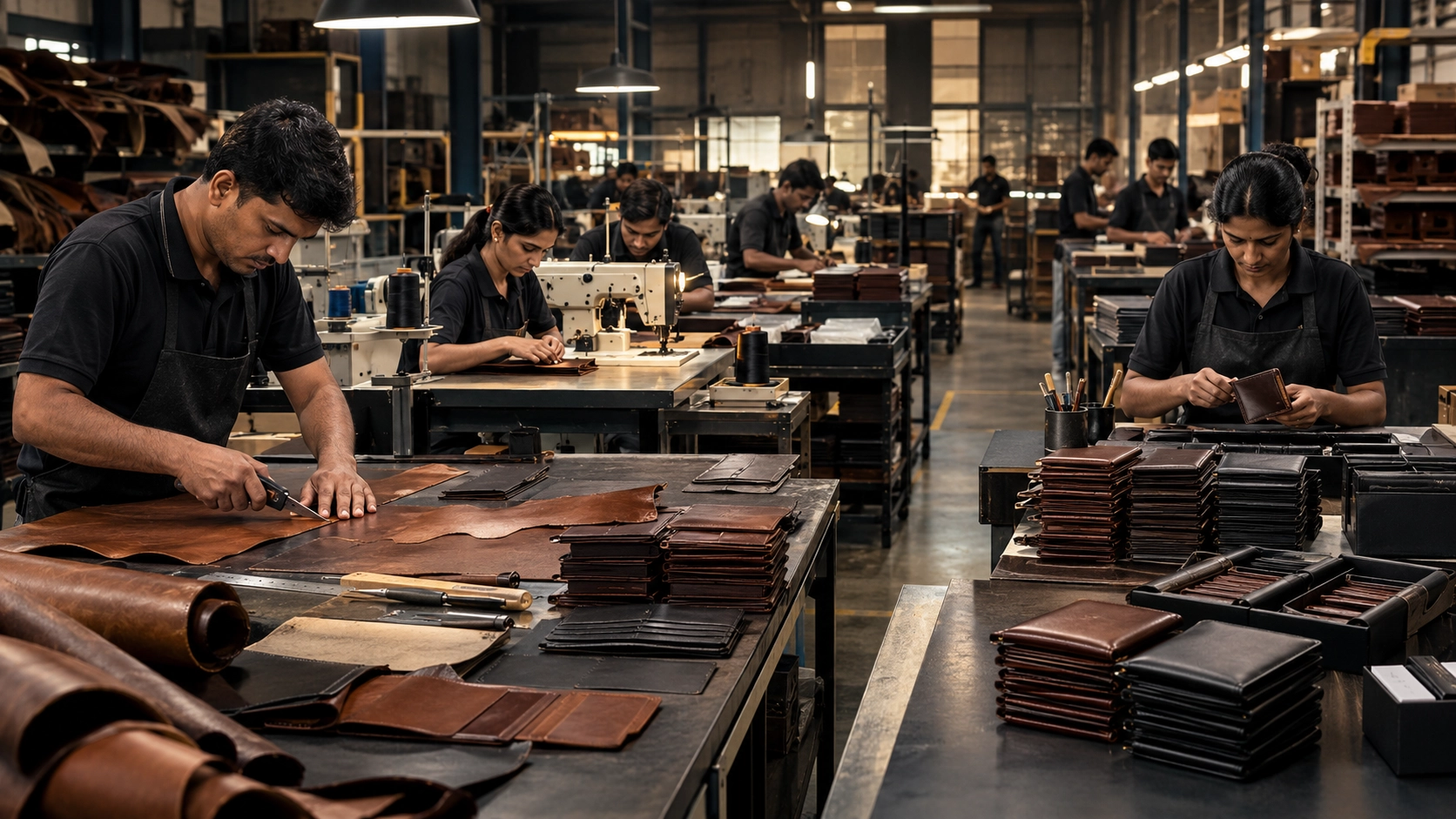
Exalter Global Co., based in Kolkata, India, works with international buyers seeking leather wallets and related leather goods. Through its manufacturing and product offerings, the company supports sourcing discussions involving established designs, custom development, private-label branding, and wholesale requirements. Its brands, Exalter Vachette and Brooklyn Bridge, provide additional options for buyers evaluating leather wallet collections.
What Should Swiss Buyers Know Before Importing Leather Wallets from India?
Swiss buyers should evaluate the manufacturer's production capabilities, leather specifications, stitching quality, customization options, minimum order quantity, sample process, and export documentation before placing a bulk order. They should also confirm the correct Swiss customs classification, applicable import taxes, shipping responsibilities, and any material-specific restrictions. Written specifications and an approved pre-production sample help reduce quality disputes and unexpected costs.
For a reliable procurement process, buyers should follow these seven priorities:
- Verify the supplier: Review the manufacturer's capabilities, business information, product range, and export support.
- Define product requirements: Specify leather type, dimensions, compartments, colours, branding, and packaging.
- Approve a sample: Check materials, construction, functionality, and finishing before bulk production.
- Confirm commercial terms: Agree on quantities, pricing, payment milestones, lead times, and delivery responsibilities.
- Check compliance: Confirm product classification, leather origin, material restrictions, and destination-market requirements.
- Prepare shipping documents: Coordinate the commercial invoice, packing list, transport documents, and customs information.
- Calculate landed cost: Include freight, insurance where applicable, import VAT, customs-related charges, and delivery costs.
This guide explains how Swiss businesses can approach each stage when sourcing from an Indian leather wallet exporter, including how to assess Exalter Global Co. as a potential manufacturing and supply partner.
1. Why Source Leather Wallets from India?
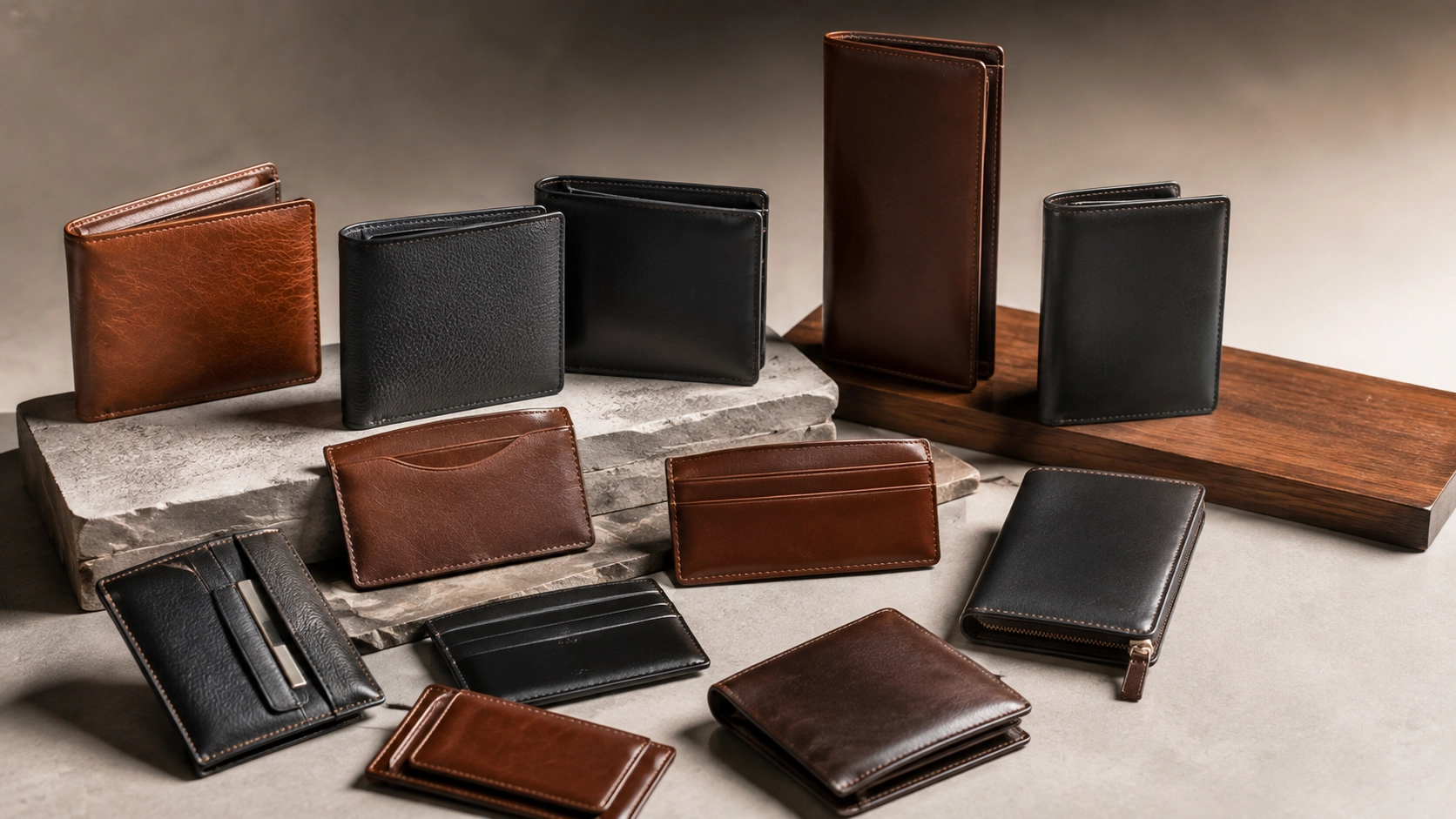
India has an established leather goods manufacturing sector serving domestic and international markets. Buyers can explore traditional bifold wallets, slim cardholders, money clip wallets, coin pocket designs, and contemporary accessories through manufacturers with different production specialities.
For Swiss businesses, sourcing from India may provide access to varied leather finishes, flexible product development, private-label options, and wholesale production. The actual benefits depend on the supplier, specifications, order volume, and agreed commercial terms.
Manufacturing flexibility and product variety
Retailers and distributors rarely need only one wallet design. A balanced collection may combine everyday bifold wallets, minimalist cardholders, premium gift products, and functional designs with additional storage. A capable supplier can help buyers evaluate these options without treating every product as an entirely separate sourcing project.
Exalter Global Co. presents leather wallets and related accessories for buyers exploring both existing designs and custom manufacturing. Its leather wallet manufacturing and private-label capabilities provide a starting point for assessing product categories, development support, branding possibilities, and bulk supply requirements.
Private-label opportunities for Swiss brands
Private-label manufacturing allows a Swiss business to sell products under its own brand. Depending on the project, customization may include leather selection, colour combinations, dimensions, pocket layouts, lining, stitching, logo placement, and retail packaging.
Before production, buyers should establish which elements are customizable, which features are standard, and which changes require new tooling or development charges. They should also confirm ownership and permitted use of logos, artwork, product designs, and packaging files.
Choosing a supplier for long-term value
The lowest quotation does not always represent the lowest purchasing cost. Inconsistent materials, incorrect dimensions, poor packaging, delayed dispatches, or high defect rates can reduce margins and increase operational work.
Swiss importers should compare suppliers using documented specifications, sample results, production controls, communication quality, and realistic delivery commitments. These factors are particularly important when establishing a recurring wholesale programme.
2. Understanding Exalter Global Co. and Its Leather Wallet Offering
Exalter Global Co. is a Kolkata-based company serving international buyers across its business activities. For Swiss importers investigating leather wallets, the relevant starting point is its published manufacturing information, available product range, customization options, and ability to address the requirements of a specific order.
The company should be evaluated against the same practical procurement criteria as any prospective supplier. Buyers can review its product pages, request current specifications, discuss sample development, and obtain written confirmation of production and export arrangements before committing to a commercial order.
Exalter Vachette: manufacturing and private-label focus
Exalter Vachette is the relevant brand to explore when the priority is leather goods manufacturing, product development, and private-label supply. Its published offering covers leather wallets and other leather accessories, making it a useful starting point for businesses evaluating a broader collection.
Swiss buyers considering a manufacturing partnership should discuss leather grades, available finishes, production capacity for the proposed order, quality inspection procedures, sample approval, packaging, and delivery schedules. Any certification or compliance claim should be checked against current documentation and the scope of the specific facility or product.
Brooklyn Bridge: wallet styles and collection planning
Brooklyn Bridge provides another brand option within Exalter Global Co.'s leather wallet offering. Buyers can evaluate relevant finished-product styles when planning a retail assortment, comparing functional layouts, or exploring designs that may suit their target customers.
Depending on the proposed arrangement, buyers should confirm whether a product is available as a standard design, can be adapted for private-label use, or requires a new development project. Brand availability alone should not be interpreted as confirmation of a particular model's stock, minimum order, or production lead time.
Product categories worth evaluating
When reviewing a potential collection, Swiss wholesalers and retailers may consider the following categories:
- Bifold wallets: Traditional layouts for banknotes and payment cards.
- Trifold wallets: Compact folded designs with additional storage sections.
- Slim wallets: Minimalist profiles designed to reduce pocket bulk.
- Leather cardholders: Compact accessories for carrying essential cards.
- Money clip wallets: Designs combining card storage with a clip or cash-retention feature.
- ID window wallets: Wallets with a dedicated transparent identification compartment.
- Coin pocket wallets: Styles incorporating a compartment for coins or small items.
- RFID wallets: Products incorporating a specified radio-frequency shielding construction.
Buyers can explore the company's premium leather wallet collection and minimalist wallet styles to identify relevant product concepts. Treat online listings as a starting point, then confirm current availability, specifications, pricing, and suitability for the intended Swiss market directly with the supplier.
3. How to Evaluate a Leather Wallet Manufacturer in India
Choosing a leather wallet manufacturer in India requires more than browsing attractive product photographs. Commercial buyers need evidence that the supplier understands the required specifications and can consistently deliver the agreed product.
Use a structured supplier evaluation checklist
- Verify the legal business identity and contact details.
- Review the manufacturer's relevant product experience and production capabilities.
- Request clear photographs, material details, and available product specifications.
- Confirm whether manufacturing is performed in-house, outsourced, or managed through a combination of processes.
- Ask how incoming materials, stitching, dimensions, finishing, and final products are inspected.
- Request a sample and compare it with the written specification.
- Confirm minimum order quantities, production lead times, and repeat-order arrangements.
- Check references or relevant business credentials where appropriate.
- Obtain written confirmation of packaging, shipping terms, payment terms, and documentation responsibilities.
Exalter Global Co.'s leather wallet manufacturer information can help buyers begin this review. The next step is to discuss a defined product brief and request order-specific answers rather than relying only on general marketing statements.
Questions to ask before requesting a quotation
- Which leather types and finishes are available for the required wallet?
- Can the supplier reproduce the approved dimensions, colour, and construction consistently?
- What is the minimum order quantity for standard and customized designs?
- Are sample charges, development costs, and tooling fees applicable?
- What inspection process is followed before dispatch?
- Which export documents can the supplier provide for the shipment?
- Who arranges freight, insurance, customs clearance, and final delivery under the proposed Incoterm?
- What is the procedure for reporting defects or discrepancies?
Clear answers create a stronger basis for comparing suppliers and reduce the risk of misunderstandings during production.
-
Sale!
RFID Protected Pull Strap Wallet for Cards & Cash
Original price was: $41.90.$15.19Current price is: $15.19.
You save -
Sale!
RFID Protected Pull Strap Leather Card Holder Wallet
Original price was: $41.90.$15.19Current price is: $15.19.
You save -
Sale!
RFID Protected Pull Strap Card Holder Wallet for Men Slim
Original price was: $41.90.$15.19Current price is: $15.19.
You save -
Sale!
RFID Protected Leather Card Holder Wallet for Men & Women
Original price was: $18.10.$6.39Current price is: $6.39.
You save -
Sale!
RFID Protected Pull Strap Card Holder Wallet for Secure Access
Original price was: $40.70.$14.79Current price is: $14.79.
You save -
Sale!
Slim RFID Protected Pull Strap Wallet for Cards & Cash
Original price was: $40.70.$14.79Current price is: $14.79.
You save -
Sale!
RFID Protected Pull Strap Card Holder Wallet for Daily Use
Original price was: $40.70.$14.79Current price is: $14.79.
You save -
Sale!
RFID Protected Card Holder Wallet for Secure Cards & Cash
Original price was: $27.30.$10.79Current price is: $10.79.
You save -
Sale!
RFID Protected Leather Card Holder Wallet with Slim Design
Original price was: $27.30.$10.79Current price is: $10.79.
You save -
Sale!
Slim RFID Protected Leather Card Holder Wallet for Cards
Original price was: $27.30.$10.79Current price is: $10.79.
You save -
Sale!
RFID Protected Leather Card Holder Wallet for Secure Cards
Original price was: $27.30.$10.79Current price is: $10.79.
You save -
Sale!
RFID Protected Genuine Leather Card Holder for Daily Use
Original price was: $27.30.$10.79Current price is: $10.79.
You save
-
Sale!
RFID Protected Pull Strap Wallet for Cards & Cash
Original price was: $41.90.$15.19Current price is: $15.19.
You save -
Sale!
RFID Protected Pull Strap Leather Card Holder Wallet
Original price was: $41.90.$15.19Current price is: $15.19.
You save -
Sale!
RFID Protected Pull Strap Card Holder Wallet for Men Slim
Original price was: $41.90.$15.19Current price is: $15.19.
You save -
Sale!
RFID Protected Leather Card Holder Wallet for Men & Women
Original price was: $18.10.$6.39Current price is: $6.39.
You save -
Sale!
RFID Protected Pull Strap Card Holder Wallet for Secure Access
Original price was: $40.70.$14.79Current price is: $14.79.
You save -
Sale!
Slim RFID Protected Pull Strap Wallet for Cards & Cash
Original price was: $40.70.$14.79Current price is: $14.79.
You save -
Sale!
RFID Protected Pull Strap Card Holder Wallet for Daily Use
Original price was: $40.70.$14.79Current price is: $14.79.
You save -
Sale!
RFID Protected Card Holder Wallet for Secure Cards & Cash
Original price was: $27.30.$10.79Current price is: $10.79.
You save -
Sale!
RFID Protected Leather Card Holder Wallet with Slim Design
Original price was: $27.30.$10.79Current price is: $10.79.
You save -
Sale!
Slim RFID Protected Leather Card Holder Wallet for Cards
Original price was: $27.30.$10.79Current price is: $10.79.
You save -
Sale!
RFID Protected Leather Card Holder Wallet for Secure Cards
Original price was: $27.30.$10.79Current price is: $10.79.
You save -
Sale!
RFID Protected Genuine Leather Card Holder for Daily Use
Original price was: $27.30.$10.79Current price is: $10.79.
You save
-
Sale!
RFID Protected Pull Strap Wallet for Cards & Cash
Original price was: $41.90.$15.19Current price is: $15.19.
You save -
Sale!
RFID Protected Pull Strap Leather Card Holder Wallet
Original price was: $41.90.$15.19Current price is: $15.19.
You save -
Sale!
RFID Protected Pull Strap Card Holder Wallet for Men Slim
Original price was: $41.90.$15.19Current price is: $15.19.
You save -
Sale!
RFID Protected Leather Card Holder Wallet for Men & Women
Original price was: $18.10.$6.39Current price is: $6.39.
You save -
Sale!
RFID Protected Pull Strap Card Holder Wallet for Secure Access
Original price was: $40.70.$14.79Current price is: $14.79.
You save -
Sale!
Slim RFID Protected Pull Strap Wallet for Cards & Cash
Original price was: $40.70.$14.79Current price is: $14.79.
You save -
Sale!
RFID Protected Pull Strap Card Holder Wallet for Daily Use
Original price was: $40.70.$14.79Current price is: $14.79.
You save -
Sale!
RFID Protected Card Holder Wallet for Secure Cards & Cash
Original price was: $27.30.$10.79Current price is: $10.79.
You save -
Sale!
RFID Protected Leather Card Holder Wallet with Slim Design
Original price was: $27.30.$10.79Current price is: $10.79.
You save -
Sale!
Slim RFID Protected Leather Card Holder Wallet for Cards
Original price was: $27.30.$10.79Current price is: $10.79.
You save -
Sale!
RFID Protected Leather Card Holder Wallet for Secure Cards
Original price was: $27.30.$10.79Current price is: $10.79.
You save -
Sale!
RFID Protected Genuine Leather Card Holder for Daily Use
Original price was: $27.30.$10.79Current price is: $10.79.
You save
4. Leather Quality, Construction, and Product Specifications
Leather quality influences the appearance, durability, feel, and perceived value of a wallet. Swiss buyers should define the material precisely rather than relying on descriptions such as premium leather or export quality.
Choose the right leather and finish
Different leather types offer different textures, performance characteristics, and price points. Full-grain leather retains the natural grain surface, while corrected-grain and other finished leathers may offer a more uniform appearance. Nappa leather is commonly associated with a soft hand feel, although its characteristics depend on the hide and finishing process.
Buyers should specify the required leather category, thickness, surface finish, colour, softness, and acceptable natural variations. If the product uses a coated or synthetic material instead, that distinction should be clearly documented and accurately represented to customers.
Request a physical swatch or approved sample when colour consistency matters. Screen images cannot reliably communicate the precise colour, texture, sheen, or feel of leather.
Inspect stitching, edges, lining, and hardware
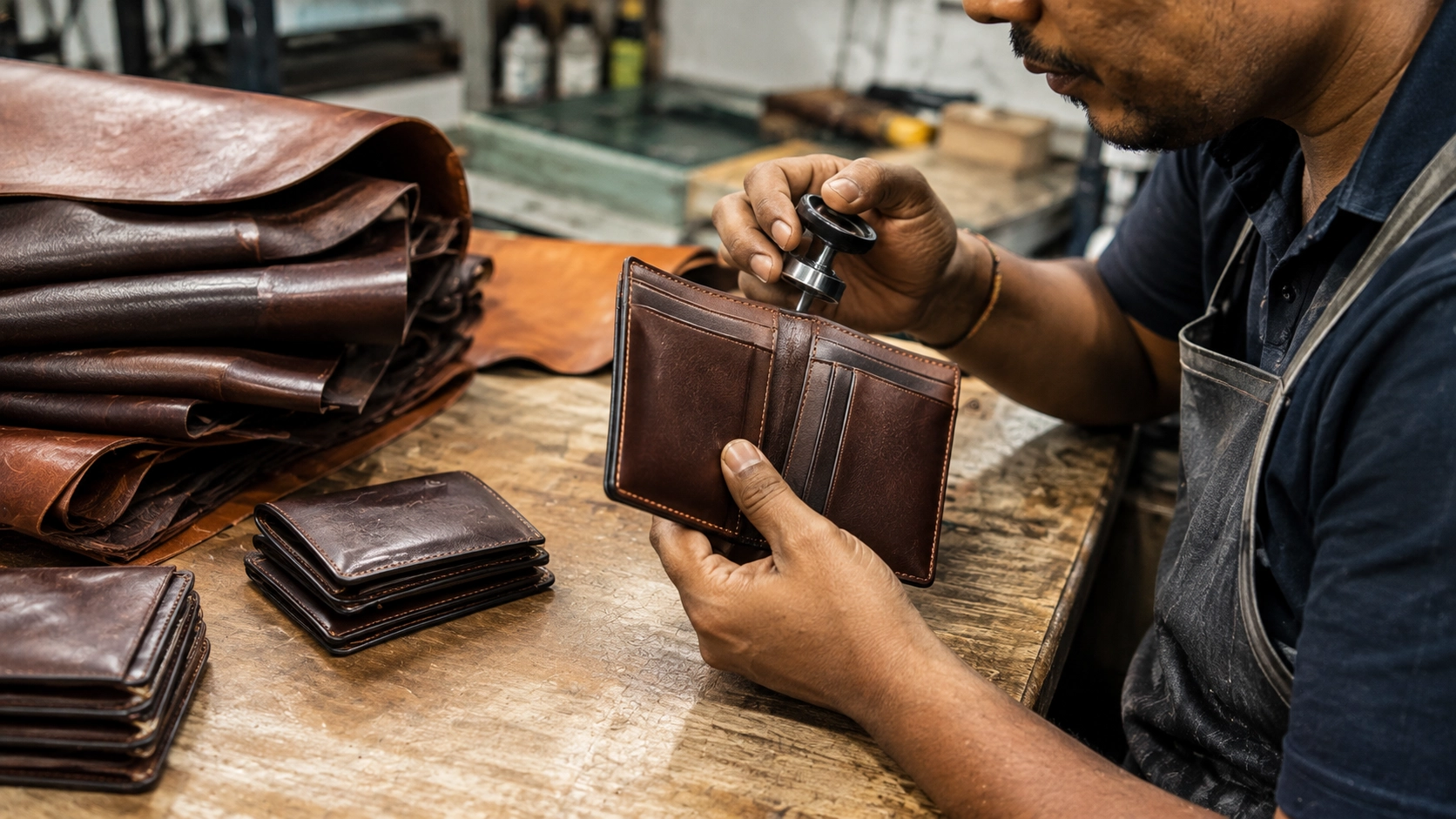
A wallet's overall quality depends on the complete construction, not simply the outer leather. Poorly finished edges, loose threads, uneven seams, weak lining, or unreliable closures can undermine an otherwise attractive product.
- Stitching: Check stitch spacing, tension, alignment, and loose thread ends.
- Edges: Inspect edge paint, folding, burnishing, and consistency around corners.
- Compartments: Verify pocket dimensions, card-slot access, and cash compartment capacity.
- Hardware: Check clips, zippers, snaps, and decorative metal components where applicable.
- Lining: Confirm the material, attachment, thickness, and finish.
- Dimensions: Measure the finished wallet against the approved specification.
- Functionality: Test card insertion, removal, folding, closures, and any special mechanisms.
Set measurable acceptance criteria
Terms such as excellent workmanship are difficult to enforce without measurable standards. A written quality specification should define acceptable dimensions, colour variation, visible defects, stitch consistency, logo placement, and functional performance.
Where relevant, buyers can agree on an inspection checklist, sampling plan, defect classification, and corrective-action process. The agreed standard should be documented before bulk manufacturing begins.
RFID protection and product claims
RFID wallets may appeal to customers seeking additional protection for contactless cards. However, buyers should not assume that every wallet described as RFID protected provides identical performance.
Request details of the shielding construction and available test evidence. Confirm which frequencies and card types the stated performance covers, and ensure that marketing claims match the evidence. Avoid promising complete protection against every form of electronic theft.
5. Custom Leather Wallet Manufacturing and Private Label
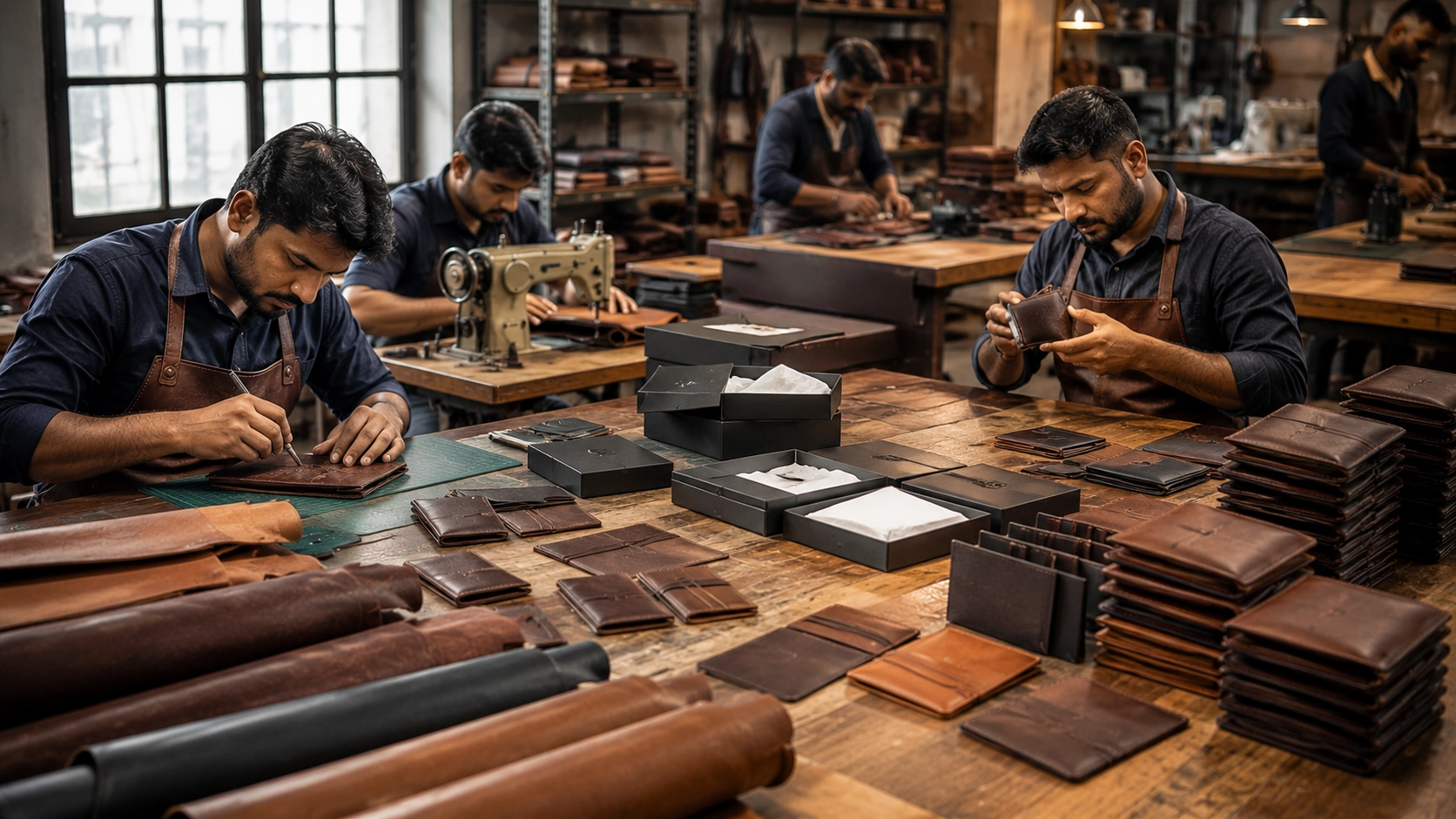
Custom manufacturing enables Swiss brands to develop products that reflect their own positioning, customer preferences, and retail strategy. It can also help wholesalers differentiate their collections from standard catalogue products.
Exalter Global Co. can be approached to discuss existing designs, product adaptation, and private-label requirements. The exact scope, feasibility, pricing, and minimum order should be confirmed for each project.
What can buyers customize?
- Material: Leather category, thickness, texture, and finish.
- Colour: Outer leather, lining, thread, and contrasting details.
- Design: Bifold, trifold, slim, cardholder, or money clip construction.
- Interior: Card slots, cash compartments, coin pockets, and ID windows.
- Branding: Embossed, debossed, printed, or metal logo applications, subject to feasibility.
- Packaging: Branded boxes, sleeves, inserts, labels, and protective packaging.
- Presentation: Product photography, colour references, and retail-ready presentation requirements.
A practical sample-to-production workflow
- Submit the brief: Share target dimensions, reference images, intended retail positioning, and estimated quantity.
- Confirm feasibility: Agree on materials, construction, branding methods, and development charges.
- Review the quotation: Confirm the price basis, minimum order, payment milestones, and delivery terms.
- Develop the sample: Have the proposed design and construction prepared for review.
- Inspect and revise: Check appearance, dimensions, functionality, colour, and finishing.
- Approve in writing: Record the final specification and approved sample reference.
- Begin bulk production: Proceed according to the agreed purchase order and payment terms.
- Inspect before dispatch: Verify the finished order against the approved requirements.
Sample approval is a critical control point. Buyers should not assume that a verbal description or an unapproved digital image is sufficient authorization for mass production.
6. Leather Wallet Pricing, MOQ, and Landed Cost
The quotation from a leather wallet exporter in India should be assessed alongside the full cost of bringing the products to Switzerland. The manufacturing price is only one component of the final procurement cost.
What determines the supplier quotation?
- Leather type, grade, thickness, and finish.
- Wallet construction, dimensions, and number of compartments.
- Stitching complexity, lining, hardware, and finishing requirements.
- Logo application, packaging, and custom development.
- Order quantity, material availability, and production planning.
- Inspection, packing, and any additional agreed services.
Higher quantities may improve unit economics, but buyers should avoid ordering more inventory than their sales forecasts justify. Discuss minimum order quantities for each design, colour, and customization level separately.
Calculate the total landed cost
A useful budgeting model is:
Landed cost = product cost + export packing + freight + insurance where applicable + customs clearance + applicable import taxes and duties + other delivery charges.
Divide the total shipment cost by the number of saleable units to estimate the landed cost per wallet. Include bank charges, currency conversion, quality inspection, and expected defect-related expenses when relevant to the purchasing decision.
Switzerland's standard VAT rate is 8.1%. Import VAT is generally calculated using the applicable taxable base, which can include the goods' value and relevant costs up to the Swiss destination. The precise treatment depends on the shipment and current rules. Consult the Swiss government's guidance on import VAT before finalizing your budget.
Do not assume that customs duty is either always payable or always zero. Check the exact tariff classification and applicable measures for the specific product through the official Swiss Federal Office for Customs and Border Security resources and its tariff information system.
Compare quotations on equal terms
When evaluating suppliers, compare the same material specification, order quantity, packaging, inspection requirements, and delivery basis. A quotation excluding freight and a quotation including delivery are not directly comparable.
Confirm the agreed Incoterm, named place, and applicable version of the rules. Clarify who handles export clearance, international transport, insurance, import clearance, and payment of import charges.
For first-time orders, a clearly documented sample process and a manageable initial quantity may be more valuable than a large order based solely on a lower unit price.
-
Sale!
RFID Protected Pull Strap Wallet for Cards & Cash
Original price was: $41.90.$15.19Current price is: $15.19.
You save -
Sale!
RFID Protected Pull Strap Leather Card Holder Wallet
Original price was: $41.90.$15.19Current price is: $15.19.
You save -
Sale!
RFID Protected Pull Strap Card Holder Wallet for Men Slim
Original price was: $41.90.$15.19Current price is: $15.19.
You save -
Sale!
RFID Protected Leather Card Holder Wallet for Men & Women
Original price was: $18.10.$6.39Current price is: $6.39.
You save -
Sale!
RFID Protected Pull Strap Card Holder Wallet for Secure Access
Original price was: $40.70.$14.79Current price is: $14.79.
You save -
Sale!
Slim RFID Protected Pull Strap Wallet for Cards & Cash
Original price was: $40.70.$14.79Current price is: $14.79.
You save -
Sale!
RFID Protected Pull Strap Card Holder Wallet for Daily Use
Original price was: $40.70.$14.79Current price is: $14.79.
You save -
Sale!
RFID Protected Card Holder Wallet for Secure Cards & Cash
Original price was: $27.30.$10.79Current price is: $10.79.
You save -
Sale!
RFID Protected Leather Card Holder Wallet with Slim Design
Original price was: $27.30.$10.79Current price is: $10.79.
You save -
Sale!
Slim RFID Protected Leather Card Holder Wallet for Cards
Original price was: $27.30.$10.79Current price is: $10.79.
You save -
Sale!
RFID Protected Leather Card Holder Wallet for Secure Cards
Original price was: $27.30.$10.79Current price is: $10.79.
You save -
Sale!
RFID Protected Genuine Leather Card Holder for Daily Use
Original price was: $27.30.$10.79Current price is: $10.79.
You save
-
Sale!
RFID Protected Pull Strap Wallet for Cards & Cash
Original price was: $41.90.$15.19Current price is: $15.19.
You save -
Sale!
RFID Protected Pull Strap Leather Card Holder Wallet
Original price was: $41.90.$15.19Current price is: $15.19.
You save -
Sale!
RFID Protected Pull Strap Card Holder Wallet for Men Slim
Original price was: $41.90.$15.19Current price is: $15.19.
You save -
Sale!
RFID Protected Leather Card Holder Wallet for Men & Women
Original price was: $18.10.$6.39Current price is: $6.39.
You save -
Sale!
RFID Protected Pull Strap Card Holder Wallet for Secure Access
Original price was: $40.70.$14.79Current price is: $14.79.
You save -
Sale!
Slim RFID Protected Pull Strap Wallet for Cards & Cash
Original price was: $40.70.$14.79Current price is: $14.79.
You save -
Sale!
RFID Protected Pull Strap Card Holder Wallet for Daily Use
Original price was: $40.70.$14.79Current price is: $14.79.
You save -
Sale!
RFID Protected Card Holder Wallet for Secure Cards & Cash
Original price was: $27.30.$10.79Current price is: $10.79.
You save -
Sale!
RFID Protected Leather Card Holder Wallet with Slim Design
Original price was: $27.30.$10.79Current price is: $10.79.
You save -
Sale!
Slim RFID Protected Leather Card Holder Wallet for Cards
Original price was: $27.30.$10.79Current price is: $10.79.
You save -
Sale!
RFID Protected Leather Card Holder Wallet for Secure Cards
Original price was: $27.30.$10.79Current price is: $10.79.
You save -
Sale!
RFID Protected Genuine Leather Card Holder for Daily Use
Original price was: $27.30.$10.79Current price is: $10.79.
You save
-
Sale!
RFID Protected Pull Strap Wallet for Cards & Cash
Original price was: $41.90.$15.19Current price is: $15.19.
You save -
Sale!
RFID Protected Pull Strap Leather Card Holder Wallet
Original price was: $41.90.$15.19Current price is: $15.19.
You save -
Sale!
RFID Protected Pull Strap Card Holder Wallet for Men Slim
Original price was: $41.90.$15.19Current price is: $15.19.
You save -
Sale!
RFID Protected Leather Card Holder Wallet for Men & Women
Original price was: $18.10.$6.39Current price is: $6.39.
You save -
Sale!
RFID Protected Pull Strap Card Holder Wallet for Secure Access
Original price was: $40.70.$14.79Current price is: $14.79.
You save -
Sale!
Slim RFID Protected Pull Strap Wallet for Cards & Cash
Original price was: $40.70.$14.79Current price is: $14.79.
You save -
Sale!
RFID Protected Pull Strap Card Holder Wallet for Daily Use
Original price was: $40.70.$14.79Current price is: $14.79.
You save -
Sale!
RFID Protected Card Holder Wallet for Secure Cards & Cash
Original price was: $27.30.$10.79Current price is: $10.79.
You save -
Sale!
RFID Protected Leather Card Holder Wallet with Slim Design
Original price was: $27.30.$10.79Current price is: $10.79.
You save -
Sale!
Slim RFID Protected Leather Card Holder Wallet for Cards
Original price was: $27.30.$10.79Current price is: $10.79.
You save -
Sale!
RFID Protected Leather Card Holder Wallet for Secure Cards
Original price was: $27.30.$10.79Current price is: $10.79.
You save -
Sale!
RFID Protected Genuine Leather Card Holder for Daily Use
Original price was: $27.30.$10.79Current price is: $10.79.
You save
7. Export Documentation and Swiss Import Requirements
Import documentation should be discussed before production and checked before dispatch. Missing information, inconsistent invoice values, or an incorrect product description can cause customs delays and additional costs.
Documents to prepare for a commercial shipment
The exact documents depend on the goods, transport method, transaction structure, and applicable regulations. A typical leather wallet shipment may require the following:
| Document | Purpose |
|---|---|
| Commercial invoice | Identifies the buyer, seller, goods, quantities, prices, currency, and agreed trade terms. |
| Packing list | Details package counts, contents, quantities, and relevant weights and dimensions. |
| Transport document | Provides shipment information, such as an air waybill or bill of lading, according to the transport method. |
| Customs declaration information | Supports tariff classification, customs valuation, origin information, and the import declaration. |
| Origin documentation | Provides origin evidence when required for customs, buyer records, or a specific preferential treatment claim. |
| Additional permits or certificates | Required only where applicable to the materials, species, product, or shipment. |
Confirm document requirements with the exporter, freight forwarder, and Swiss customs representative. The exporter should provide accurate commercial information, while the importer or its appointed representative should verify the Swiss import declaration requirements.
Tariff classification and customs valuation
Leather wallets generally fall within the tariff classification framework for pocket wallets and similar articles, but the correct code must be confirmed for the actual product. Material composition, construction, and the applicable tariff schedule can affect classification.
Use the official Swiss tariff system to verify the relevant code, duty treatment, and any applicable measures before ordering. The Swiss Federal Office for Customs and Border Security provides official customs information. Do not copy a tariff code from another wallet without checking its suitability.
The invoice should accurately describe the products and state the agreed transaction values. Product descriptions should be specific enough to support customs processing, such as leather bifold wallets or leather cardholders, where that description correctly represents the goods.
Leather origin and protected species
Ordinary leather wallets do not automatically require wildlife permits. However, products made with certain protected animal species may be subject to CITES controls, import permits, certificates, and inspection requirements.
Swiss buyers should verify the exact material and species before purchasing exotic leather products. Consult the Swiss authorities' guidance on importing products subject to species-conservation rules when relevant. Avoid ordering restricted materials until the required documentation and legal conditions have been confirmed.
Labelling and product claims
Confirm which product information must appear on the wallet, packaging, labels, or accompanying documents. Requirements can vary with the product and how it is marketed.
Material descriptions, country-of-origin statements, environmental claims, and certification references should be accurate and supportable. If a buyer requires a particular label or packaging format, provide the artwork and written instructions before sample approval.
8. Shipping Leather Wallets from India to Switzerland
The right shipping method depends on the shipment's size, urgency, value, and delivery requirements. Buyers should compare the complete logistics cost rather than selecting a method based on transit time alone.
Air freight and express courier
Air freight and express courier services may suit samples, urgent replenishment, and relatively compact shipments. They can reduce transit time, but charges may be influenced by both actual weight and volumetric weight.
Before booking, confirm collection arrangements, export clearance, transit estimates, destination handling, customs brokerage, and final delivery charges. Ask whether the quoted service includes import clearance or merely transport to the destination.
Sea freight
Sea freight may be worth evaluating for larger shipments when the buyer has sufficient lead time. The total cost depends on shipment volume, consolidation, port handling, inland transport, and other charges.
Compare door-to-door quotations where possible. A low port-to-port rate may exclude substantial destination costs, so the comparison should cover the full journey to the agreed delivery point.
Agree on Incoterms and delivery responsibilities
The purchase order should identify the applicable Incoterm, named place or port, and agreed version. This helps establish the allocation of transport costs, delivery responsibilities, and risk between buyer and seller.
For example, a buyer arranging international freight may prefer a different delivery arrangement from a buyer seeking a service that includes transport to a Swiss destination. The correct choice depends on the parties' capabilities and negotiated terms.
Pre-dispatch shipping checklist
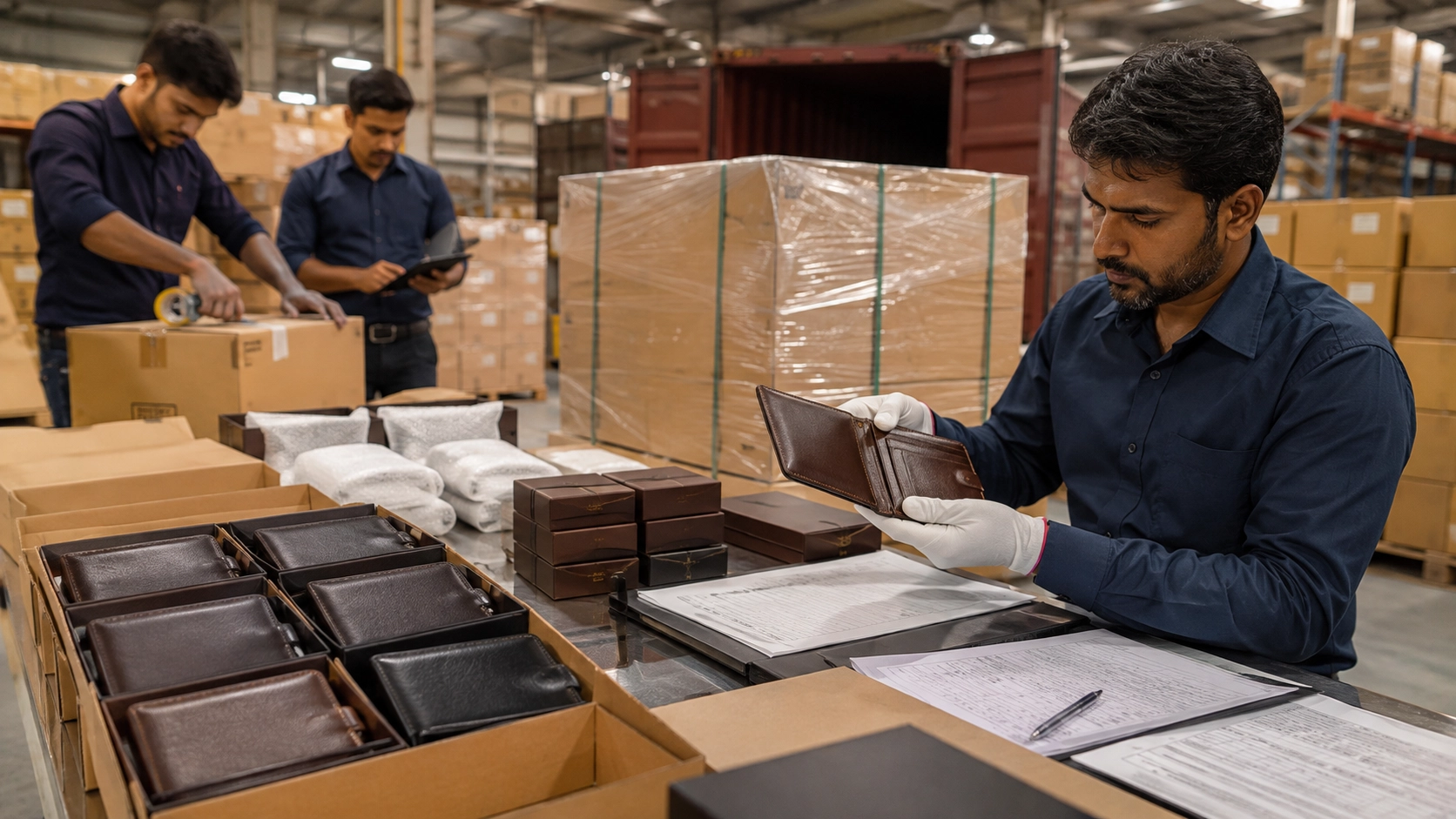
- Confirm the final quantity and product inspection results.
- Verify the commercial invoice and packing list.
- Check carton dimensions, package weights, and shipping marks.
- Confirm the tariff classification and required origin information.
- Verify the consignee and importer details.
- Confirm freight booking, insurance arrangements where applicable, and the named delivery point.
- Ensure that any required product-specific permits or certificates are ready.
- Share shipment documents with the relevant broker or importer before arrival where possible.
9. Common Sourcing Mistakes Swiss Buyers Should Avoid
Many purchasing problems can be prevented through clear specifications and documented approvals. Swiss buyers importing leather wallets from India should avoid these common mistakes:
- Choosing on price alone: Compare construction, materials, defect controls, and total landed cost.
- Skipping sample approval: Inspect a physical sample before authorizing bulk production.
- Using vague leather descriptions: Specify the material category, finish, colour, and thickness.
- Ignoring production tolerances: Agree on acceptable dimensional and visual variations.
- Assuming every product is compliant: Verify applicable import, material, labelling, and marketing requirements.
- Overlooking destination charges: Obtain a complete estimate covering freight, clearance, taxes, and delivery.
- Relying on verbal agreements: Record specifications, prices, payment terms, and delivery commitments in writing.
- Ordering excessive inventory: Align initial quantities with realistic demand and replenishment plans.
10. How to Start a Leather Wallet Sourcing Project with Exalter Global Co.
Swiss retailers, importers, distributors, wholesalers, and private-label brands can begin by defining their product requirements and identifying the most suitable wallet category.
Exalter Global Co. offers a starting point for discussing existing leather wallet designs and potential custom manufacturing requirements. Buyers should request a current quotation and verify all order-specific terms before proceeding.
Prepare a clear buyer brief
Include the following details in your initial enquiry:
- Target product category and reference photographs.
- Preferred leather type, texture, colour, and finish.
- Wallet dimensions, internal layout, and functional requirements.
- Logo artwork, branding method, and packaging preferences.
- Estimated order quantity and expected repeat-order frequency.
- Sample requirements and target delivery date.
- Destination in Switzerland and preferred shipping arrangement.
- Any specific quality, labelling, or documentation requirements.
Visit the Exalter Global Co. website to explore its business and product offering. Buyers can also review the Exalter Vachette leather goods range and relevant wallet listings before preparing a sourcing brief.
A detailed enquiry helps the supplier assess feasibility and respond with more relevant information. Confirm the proposed materials, minimum quantities, sample charges, production timeline, payment schedule, and shipping terms in writing.
Frequently Asked Questions
1. How can I find a reliable leather wallet exporter from India to Switzerland?
Review the supplier's business details, manufacturing capabilities, product specifications, sample quality, inspection procedures, and export documentation support. Compare written quotations and confirm the commercial terms before placing an order. A physical sample and clear quality standards help reduce sourcing risks.
2. Can Swiss businesses order private-label leather wallets from India?
Yes. Private-label arrangements can include custom materials, colours, dimensions, compartments, logo applications, and packaging, depending on the manufacturer's capabilities. Buyers should confirm minimum quantities, development costs, design feasibility, and branding rights before approving a sample.
3. What documents are needed to import leather wallets into Switzerland?
Typical shipments require a commercial invoice, packing list, transport document, and the information needed for the customs declaration. Origin evidence or additional permits may be necessary in particular cases. Confirm the final requirements with a Swiss customs representative and the relevant authorities.
4. Is import VAT payable on leather wallets entering Switzerland?
Commercial imports are generally subject to Swiss import VAT unless a specific exemption or special treatment applies. The standard Swiss VAT rate is 8.1%, but the applicable taxable base and treatment should be verified for the shipment. Consult official Swiss guidance before calculating the landed cost.
5. How do I calculate the landed cost of imported wallets?
Add the product price, packaging, freight, applicable insurance, customs clearance, import taxes and duties, and delivery charges. Include other relevant costs, such as currency conversion and inspection. Divide the total by the number of saleable wallets to estimate the landed cost per unit.
6. Should I request a sample before placing a bulk order?
Yes. A sample helps verify the leather, colour, dimensions, stitching, compartments, branding, and finishing. Approve the sample against a written specification and document any changes before bulk production begins.
7. How long does shipping from India to Switzerland take?
Transit time depends on the transport method, routing, carrier schedule, customs processing, and final delivery location. Express courier and air freight may suit urgent orders, while sea freight may suit larger shipments with longer lead times. Request a current, shipment-specific estimate before confirming the purchase order.
8. Are special permits required for every leather wallet?
No. Requirements depend on the product's materials and applicable regulations. Certain products made from protected animal species can require CITES documentation, permits, or inspection. Verify the exact species and material before ordering products that may fall under wildlife-trade controls.
Conclusion: Build a Reliable Leather Wallet Sourcing Partnership
Importing leather wallets from India to Switzerland can be a practical sourcing option when buyers approach the process with clear specifications, realistic cost expectations, and appropriate compliance checks. The strongest purchasing decisions combine product quality, manufacturing capability, transparent commercial terms, and dependable logistics.
Exalter Global Co. provides a starting point for Swiss businesses exploring leather wallets, private-label development, and wholesale supply. Exalter Vachette is relevant to buyers evaluating manufacturing and customization, while Brooklyn Bridge offers an additional brand to consider when reviewing wallet styles.
Before committing to bulk production, request current product information, review samples, agree on quality standards, verify Swiss import requirements, and document all commercial arrangements. This structured approach can help reduce procurement risk and establish a stronger foundation for repeat business.
Ready to explore leather wallet sourcing from India? Visit Exalter Global Co. to review the available offering and discuss your product requirements, customization needs, and export enquiry.

-
Sale!
RFID Protected Pull Strap Wallet for Cards & Cash
Original price was: $41.90.$15.19Current price is: $15.19.
You save -
Sale!
RFID Protected Pull Strap Leather Card Holder Wallet
Original price was: $41.90.$15.19Current price is: $15.19.
You save -
Sale!
RFID Protected Pull Strap Card Holder Wallet for Men Slim
Original price was: $41.90.$15.19Current price is: $15.19.
You save -
Sale!
RFID Protected Leather Card Holder Wallet for Men & Women
Original price was: $18.10.$6.39Current price is: $6.39.
You save -
Sale!
RFID Protected Pull Strap Card Holder Wallet for Secure Access
Original price was: $40.70.$14.79Current price is: $14.79.
You save -
Sale!
Slim RFID Protected Pull Strap Wallet for Cards & Cash
Original price was: $40.70.$14.79Current price is: $14.79.
You save -
Sale!
RFID Protected Pull Strap Card Holder Wallet for Daily Use
Original price was: $40.70.$14.79Current price is: $14.79.
You save -
Sale!
RFID Protected Card Holder Wallet for Secure Cards & Cash
Original price was: $27.30.$10.79Current price is: $10.79.
You save -
Sale!
RFID Protected Leather Card Holder Wallet with Slim Design
Original price was: $27.30.$10.79Current price is: $10.79.
You save -
Sale!
Slim RFID Protected Leather Card Holder Wallet for Cards
Original price was: $27.30.$10.79Current price is: $10.79.
You save -
Sale!
RFID Protected Leather Card Holder Wallet for Secure Cards
Original price was: $27.30.$10.79Current price is: $10.79.
You save -
Sale!
RFID Protected Genuine Leather Card Holder for Daily Use
Original price was: $27.30.$10.79Current price is: $10.79.
You save
How to Import Leather Wallets from India to Mexico: A Complete B2B Guide
How to Import Leather Wallets from India to Poland: A Complete B2B Guide
How to Import Leather Wallets from India to Denmark: A Complete B2B Guide
Leather Wallet Exporter from India to Sweden: Complete B2B Buyer Guide
How to Choose the Best Leather Wallet Exporter from India to Japan