
-
Sale!
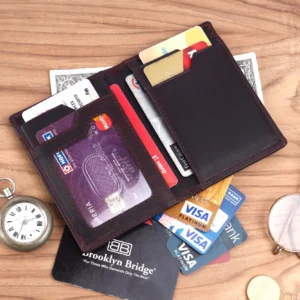
RFID Protected Pull Strap Wallet for Cards & Cash
Original price was: $41.90.$15.19Current price is: $15.19.
You save -
Sale!
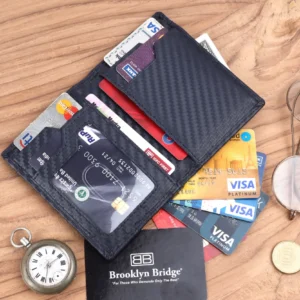
RFID Protected Pull Strap Leather Card Holder Wallet
Original price was: $41.90.$15.19Current price is: $15.19.
You save -
Sale!
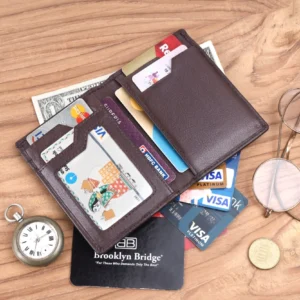
RFID Protected Pull Strap Card Holder Wallet for Men Slim
Original price was: $41.90.$15.19Current price is: $15.19.
You save -
Sale!
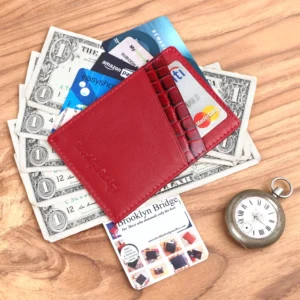
RFID Protected Leather Card Holder Wallet for Men & Women
Original price was: $18.10.$6.39Current price is: $6.39.
You save -
Sale!
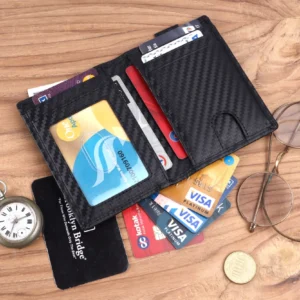
RFID Protected Pull Strap Card Holder Wallet for Secure Access
Original price was: $40.70.$14.79Current price is: $14.79.
You save -
Sale!
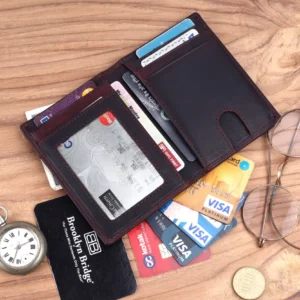
Slim RFID Protected Pull Strap Wallet for Cards & Cash
Original price was: $40.70.$14.79Current price is: $14.79.
You save -
Sale!
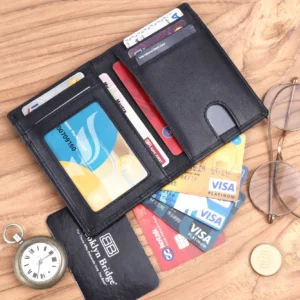
RFID Protected Pull Strap Card Holder Wallet for Daily Use
Original price was: $40.70.$14.79Current price is: $14.79.
You save -
Sale!
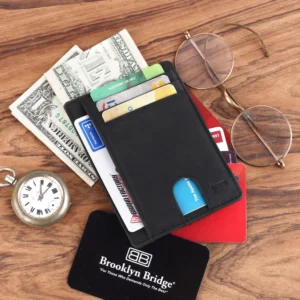
RFID Protected Card Holder Wallet for Secure Cards & Cash
Original price was: $27.30.$10.79Current price is: $10.79.
You save -
Sale!
RFID Protected Leather Card Holder Wallet with Slim Design
Original price was: $27.30.$10.79Current price is: $10.79.
You save -
Sale!
Slim RFID Protected Leather Card Holder Wallet for Cards
Original price was: $27.30.$10.79Current price is: $10.79.
You save -
Sale!

RFID Protected Leather Card Holder Wallet for Secure Cards
Original price was: $27.30.$10.79Current price is: $10.79.
You save -
Sale!
RFID Protected Genuine Leather Card Holder for Daily Use
Original price was: $27.30.$10.79Current price is: $10.79.
You save
-
Sale!
RFID Protected Pull Strap Wallet for Cards & Cash
Original price was: $41.90.$15.19Current price is: $15.19.
You save -
Sale!
RFID Protected Pull Strap Leather Card Holder Wallet
Original price was: $41.90.$15.19Current price is: $15.19.
You save -
Sale!
RFID Protected Pull Strap Card Holder Wallet for Men Slim
Original price was: $41.90.$15.19Current price is: $15.19.
You save -
Sale!
RFID Protected Leather Card Holder Wallet for Men & Women
Original price was: $18.10.$6.39Current price is: $6.39.
You save -
Sale!
RFID Protected Pull Strap Card Holder Wallet for Secure Access
Original price was: $40.70.$14.79Current price is: $14.79.
You save -
Sale!
Slim RFID Protected Pull Strap Wallet for Cards & Cash
Original price was: $40.70.$14.79Current price is: $14.79.
You save -
Sale!
RFID Protected Pull Strap Card Holder Wallet for Daily Use
Original price was: $40.70.$14.79Current price is: $14.79.
You save -
Sale!
RFID Protected Card Holder Wallet for Secure Cards & Cash
Original price was: $27.30.$10.79Current price is: $10.79.
You save -
Sale!
RFID Protected Leather Card Holder Wallet with Slim Design
Original price was: $27.30.$10.79Current price is: $10.79.
You save -
Sale!
Slim RFID Protected Leather Card Holder Wallet for Cards
Original price was: $27.30.$10.79Current price is: $10.79.
You save -
Sale!
RFID Protected Leather Card Holder Wallet for Secure Cards
Original price was: $27.30.$10.79Current price is: $10.79.
You save -
Sale!
RFID Protected Genuine Leather Card Holder for Daily Use
Original price was: $27.30.$10.79Current price is: $10.79.
You save

Table of Contents
How to Import Leather Wallets from India to Poland: A Complete B2B Guide
Importing leather wallets from India to Poland can help retailers, wholesalers, distributors, promotional merchandise companies, and private-label brands diversify their product sourcing. However, a successful import involves more than finding attractive wallets at competitive prices. Buyers must verify manufacturing capabilities, approve product specifications, calculate landed costs, and coordinate customs clearance before shipment.
For Polish businesses seeking an Indian leather wallet supplier, the right sourcing process begins with clear commercial requirements and ends with documented quality approval and controlled delivery. This guide explains each stage, from supplier evaluation to shipment planning, with practical checklists for B2B buyers.
Quick Answer: How to Import Leather Wallets from India to Poland
To import leather wallets from India to Poland, define your product requirements, shortlist and verify Indian manufacturers, request quotations and samples, agree on specifications and payment terms, confirm EU compliance requirements, prepare export and import documentation, arrange international freight, complete Polish or EU customs clearance, pay applicable duties and import VAT, and inspect the delivered goods.
- Define your wallet styles, materials, target price, and order quantity.
- Find and verify a suitable Indian manufacturer or exporter.
- Request quotations, samples, and written product specifications.
- Approve quality standards, branding, packaging, and production timelines.
- Confirm customs classification, product compliance, and import requirements.
- Agree on payment terms, Incoterms, freight, and insurance.
- Prepare export documents and arrange shipment from India.
- Complete EU customs clearance and pay applicable import charges.
- Inspect the delivery and reconcile the order against the purchase contract.
Each step affects the final landed cost, delivery schedule, and commercial risk. Buyers should confirm the requirements for their exact product and transaction before placing a bulk order.
Why Source Leather Wallets from India for the Polish Market?
India offers an established leather goods manufacturing base, skilled workmanship, and opportunities for wholesale, OEM, ODM, and private-label production. Polish importers can evaluate traditional bifold wallets, slim card holders, money clip wallets, RFID-style wallets, and other small leather goods according to their customer segments.
India-to-Poland sourcing may suit several business models:
- Retailers: Build differentiated wallet collections across price points, colours, and designs.
- Wholesalers and distributors: Source repeatable product ranges for retail and commercial accounts.
- Private-label brands: Develop products with customised branding, packaging, and specifications.
- Corporate gifting companies: Evaluate branded wallets for employee gifts, events, and promotional programmes.
- E-commerce sellers: Source compact leather accessories suited to online product catalogues.
The commercial advantage depends on the complete transaction, not just the factory price. Minimum order quantities, product consistency, freight, import charges, compliance, and inventory turnover all influence profitability.
Choosing an Indian Leather Wallet Manufacturer
Before requesting prices, identify suppliers whose production capabilities match your intended business model. A company selling ready-made wallets may not provide the same customisation, documentation, or production controls as a manufacturing partner.
Exalter Global Co. is a Kolkata-based manufacturing and business solutions company serving international buyers. Its leather goods business supports product sourcing and manufacturing discussions for wholesale and private-label requirements. Polish buyers can evaluate its capabilities without assuming that the company operates a physical office in Poland.
Explore the leather wallet manufacturing and private-label capabilities of Exalter Global Co. to review wallet categories, customisation options, and manufacturing information relevant to a sourcing enquiry.
The company's leather goods brand, Exalter Vachette, is relevant to buyers evaluating leather wallets and broader leather accessories. The Brooklyn Bridge brand can also be considered when assessing finished wallet styles for retail-oriented collections.
What Should Polish Importers Verify?
- Business identity: Confirm the supplier's legal entity, registered address, commercial contact details, and invoice information.
- Product capability: Check whether the supplier can make the required wallet construction, leather type, dimensions, and finish.
- Quality systems: Request written inspection criteria, sample approval procedures, and defect-handling arrangements.
- Customisation: Confirm logo embossing, metal branding, labels, packaging, and artwork approval requirements.
- Production planning: Establish minimum quantities, capacity allocation, material lead times, and dispatch estimates.
- Export readiness: Clarify who prepares commercial documents and coordinates with the freight forwarder.
- Compliance evidence: Request relevant test reports, material declarations, and supporting records where applicable.
Do not treat website statements or certificates displayed in marketing material as substitutes for verification. Confirm the issuing organisation, validity, scope, and relevance to the actual products being purchased.
Step 1: Define Your Product and Commercial Requirements
A precise product brief helps an Indian manufacturer quote accurately. It also reduces the risk of receiving samples or bulk goods that differ from the buyer's expectations.
Prepare a written brief covering the following details before contacting suppliers.
| Specification | What to Define |
|---|---|
| Wallet style | Bifold, trifold, card holder, money clip, slim wallet, or another construction. |
| Material | Specified leather type, grade, finish, lining, and any non-leather components. |
| Dimensions | Closed and open measurements, thickness, and acceptable tolerances. |
| Functionality | Card slots, cash compartments, coin pockets, ID windows, closures, and RFID requirements. |
| Branding | Embossing, debossing, metal logo, labels, and approved artwork. |
| Quantity | Units per style, colour, size, and total order. |
| Packaging | Individual packaging, gift boxes, barcodes, cartons, and retail labels. |
| Target economics | Target purchase price, landed-cost ceiling, and intended selling price. |
For Polish and other European retail markets, consider which card formats customers use, the preferred wallet size, and the need for Polish-language consumer information where applicable. Do not assume that one specification suits every sales channel.
Leather Wallet Types to Consider
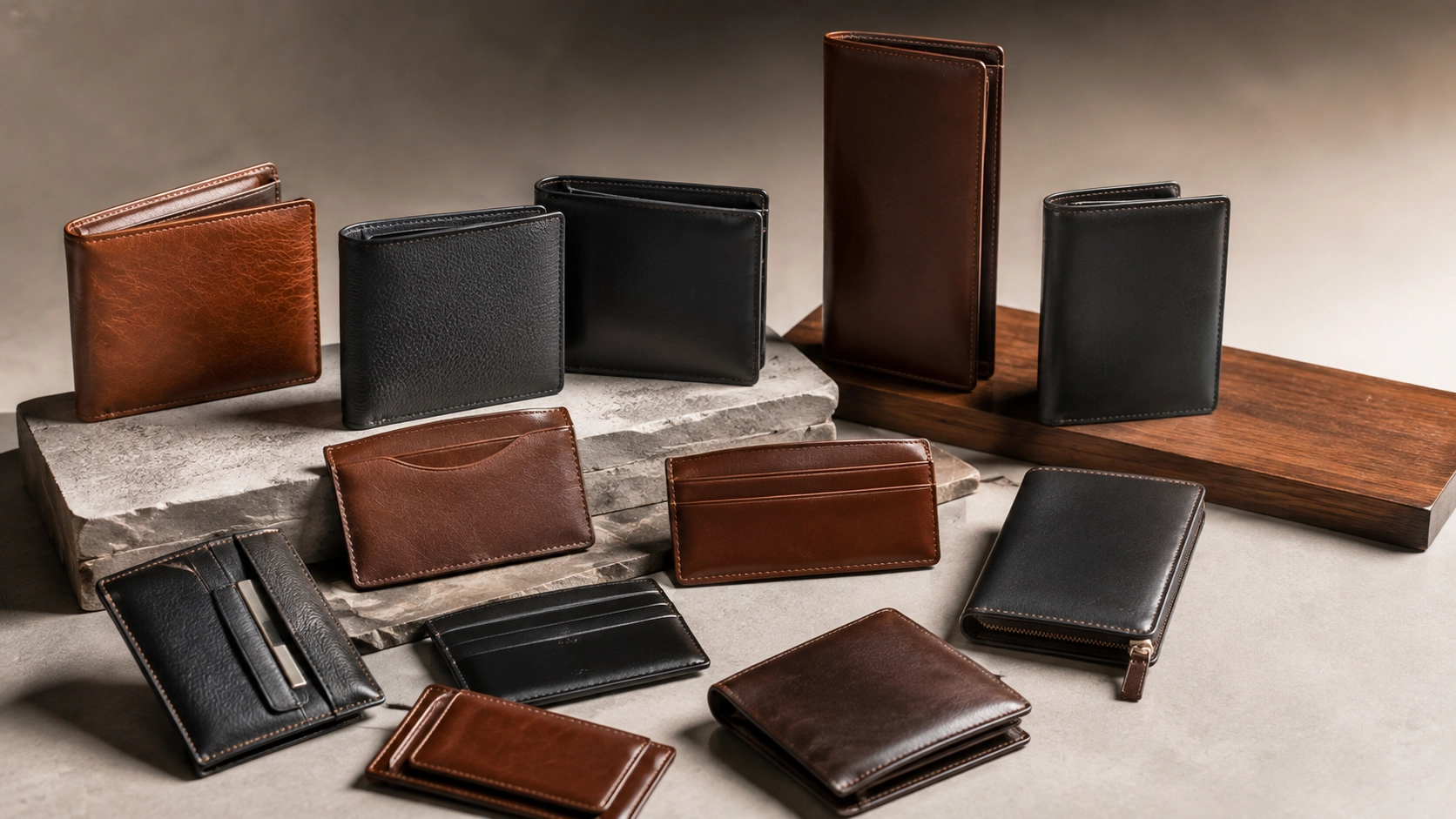
- Bifold wallets: A conventional format for everyday retail and gifting.
- Trifold wallets: A compact construction with additional folding sections.
- Slim card holders: Suitable for buyers seeking lightweight, minimalist accessories.
- Money clip wallets: Combine card storage with a clip or other cash-retention mechanism.
- RFID-style wallets: Require clear specifications and substantiation of any claimed protective performance.
- Custom private-label wallets: Allow buyers to specify materials, colours, branding, and packaging.
Review the Exalter Vachette leather goods range and the available premium wallet styles when developing an initial shortlist.
Step 2: Request Quotations and Evaluate Samples
Once your product brief is ready, send the same requirements to each shortlisted supplier. Comparing quotations against a common specification makes commercial differences easier to identify.
Ask each supplier to state the unit price, minimum order quantity, sample charges, tooling or branding costs, production lead time, packaging details, payment schedule, quotation validity, and proposed Incoterm. Request a clear breakdown of charges that are excluded from the quoted price.
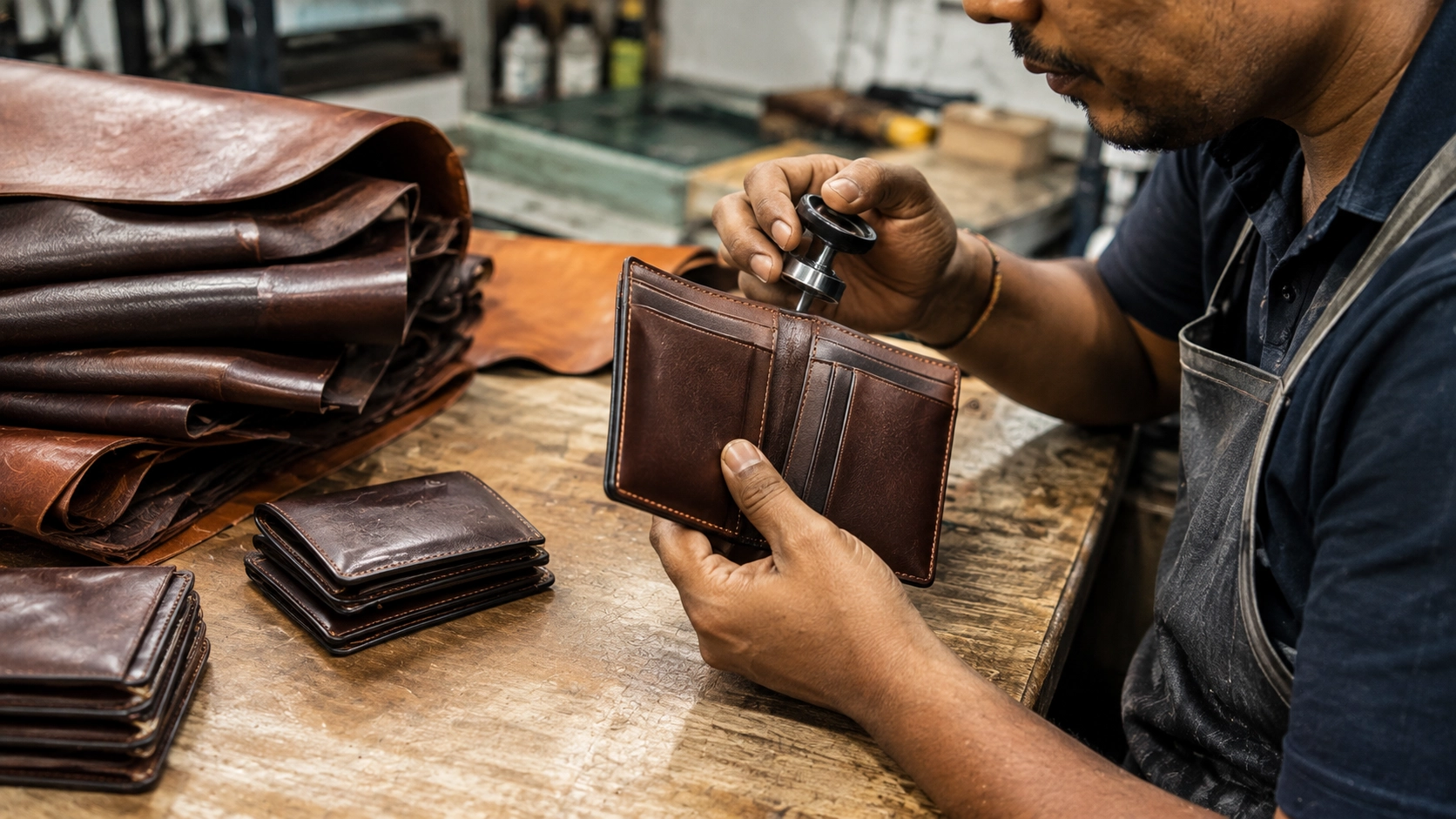
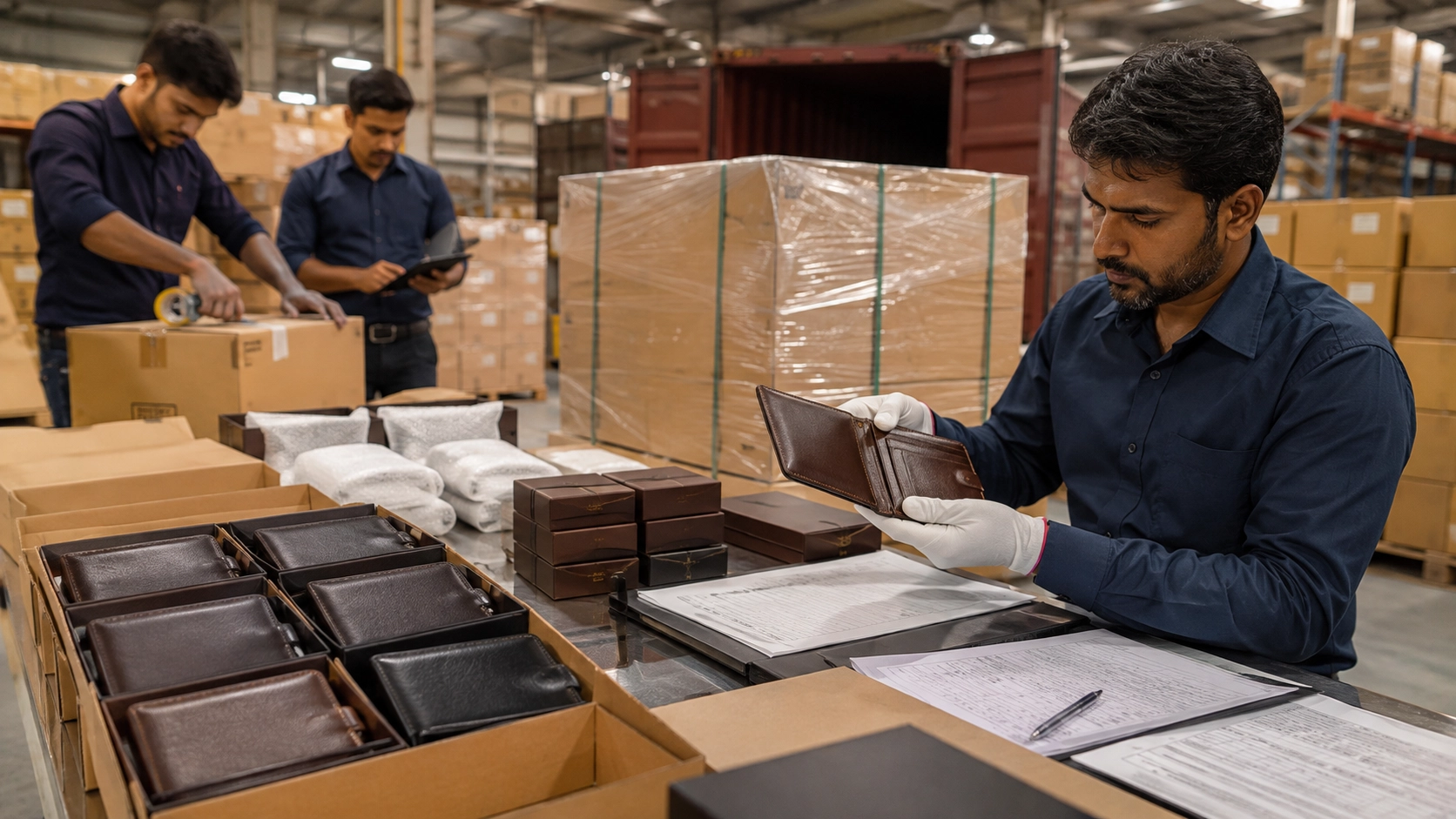
For customised orders, request a physical sample or an agreed pre-production sample before authorising bulk manufacturing. Review the leather appearance, stitching, edges, lining, hardware, slot dimensions, folding behaviour, and logo placement. Test functionality under normal intended use.
Keep an approved sample or documented reference standard for the production team and the buyer. Any later change to material, colour, dimensions, components, or packaging should receive written approval.
Quotation Comparison Checklist
- Are all suppliers quoting the same leather type and construction?
- Are branding, packaging, and accessories included in the price?
- Does the quotation identify the minimum order per style and colour?
- Are sample development, courier, tooling, and testing costs itemised?
- Is the delivery estimate based on sample approval and material availability?
- Are payment milestones and the applicable Incoterm stated clearly?
- Does the supplier explain the process for defects, shortages, and rework?
A low quotation is not automatically the best offer. Compare quality, consistency, delivery reliability, compliance evidence, and total landed cost before making a purchasing decision.
-
Sale!
RFID Protected Pull Strap Wallet for Cards & Cash
Original price was: $41.90.$15.19Current price is: $15.19.
You save -
Sale!
RFID Protected Pull Strap Leather Card Holder Wallet
Original price was: $41.90.$15.19Current price is: $15.19.
You save -
Sale!
RFID Protected Pull Strap Card Holder Wallet for Men Slim
Original price was: $41.90.$15.19Current price is: $15.19.
You save -
Sale!
RFID Protected Leather Card Holder Wallet for Men & Women
Original price was: $18.10.$6.39Current price is: $6.39.
You save -
Sale!
RFID Protected Pull Strap Card Holder Wallet for Secure Access
Original price was: $40.70.$14.79Current price is: $14.79.
You save -
Sale!
Slim RFID Protected Pull Strap Wallet for Cards & Cash
Original price was: $40.70.$14.79Current price is: $14.79.
You save -
Sale!
RFID Protected Pull Strap Card Holder Wallet for Daily Use
Original price was: $40.70.$14.79Current price is: $14.79.
You save -
Sale!
RFID Protected Card Holder Wallet for Secure Cards & Cash
Original price was: $27.30.$10.79Current price is: $10.79.
You save -
Sale!
RFID Protected Leather Card Holder Wallet with Slim Design
Original price was: $27.30.$10.79Current price is: $10.79.
You save -
Sale!
Slim RFID Protected Leather Card Holder Wallet for Cards
Original price was: $27.30.$10.79Current price is: $10.79.
You save -
Sale!
RFID Protected Leather Card Holder Wallet for Secure Cards
Original price was: $27.30.$10.79Current price is: $10.79.
You save -
Sale!
RFID Protected Genuine Leather Card Holder for Daily Use
Original price was: $27.30.$10.79Current price is: $10.79.
You save
-
Sale!
RFID Protected Pull Strap Wallet for Cards & Cash
Original price was: $41.90.$15.19Current price is: $15.19.
You save -
Sale!
RFID Protected Pull Strap Leather Card Holder Wallet
Original price was: $41.90.$15.19Current price is: $15.19.
You save -
Sale!
RFID Protected Pull Strap Card Holder Wallet for Men Slim
Original price was: $41.90.$15.19Current price is: $15.19.
You save -
Sale!
RFID Protected Leather Card Holder Wallet for Men & Women
Original price was: $18.10.$6.39Current price is: $6.39.
You save -
Sale!
RFID Protected Pull Strap Card Holder Wallet for Secure Access
Original price was: $40.70.$14.79Current price is: $14.79.
You save -
Sale!
Slim RFID Protected Pull Strap Wallet for Cards & Cash
Original price was: $40.70.$14.79Current price is: $14.79.
You save -
Sale!
RFID Protected Pull Strap Card Holder Wallet for Daily Use
Original price was: $40.70.$14.79Current price is: $14.79.
You save -
Sale!
RFID Protected Card Holder Wallet for Secure Cards & Cash
Original price was: $27.30.$10.79Current price is: $10.79.
You save -
Sale!
RFID Protected Leather Card Holder Wallet with Slim Design
Original price was: $27.30.$10.79Current price is: $10.79.
You save -
Sale!
Slim RFID Protected Leather Card Holder Wallet for Cards
Original price was: $27.30.$10.79Current price is: $10.79.
You save -
Sale!
RFID Protected Leather Card Holder Wallet for Secure Cards
Original price was: $27.30.$10.79Current price is: $10.79.
You save -
Sale!
RFID Protected Genuine Leather Card Holder for Daily Use
Original price was: $27.30.$10.79Current price is: $10.79.
You save
-
Sale!
RFID Protected Pull Strap Wallet for Cards & Cash
Original price was: $41.90.$15.19Current price is: $15.19.
You save -
Sale!
RFID Protected Pull Strap Leather Card Holder Wallet
Original price was: $41.90.$15.19Current price is: $15.19.
You save -
Sale!
RFID Protected Pull Strap Card Holder Wallet for Men Slim
Original price was: $41.90.$15.19Current price is: $15.19.
You save -
Sale!
RFID Protected Leather Card Holder Wallet for Men & Women
Original price was: $18.10.$6.39Current price is: $6.39.
You save -
Sale!
RFID Protected Pull Strap Card Holder Wallet for Secure Access
Original price was: $40.70.$14.79Current price is: $14.79.
You save -
Sale!
Slim RFID Protected Pull Strap Wallet for Cards & Cash
Original price was: $40.70.$14.79Current price is: $14.79.
You save -
Sale!
RFID Protected Pull Strap Card Holder Wallet for Daily Use
Original price was: $40.70.$14.79Current price is: $14.79.
You save -
Sale!
RFID Protected Card Holder Wallet for Secure Cards & Cash
Original price was: $27.30.$10.79Current price is: $10.79.
You save -
Sale!
RFID Protected Leather Card Holder Wallet with Slim Design
Original price was: $27.30.$10.79Current price is: $10.79.
You save -
Sale!
Slim RFID Protected Leather Card Holder Wallet for Cards
Original price was: $27.30.$10.79Current price is: $10.79.
You save -
Sale!
RFID Protected Leather Card Holder Wallet for Secure Cards
Original price was: $27.30.$10.79Current price is: $10.79.
You save -
Sale!
RFID Protected Genuine Leather Card Holder for Daily Use
Original price was: $27.30.$10.79Current price is: $10.79.
You save

Step 3: Confirm the Purchase Order and Production Plan
After approving the quotation and sample, issue a purchase order that records the complete commercial agreement. This document should match the supplier's accepted quotation and any signed specification sheet.
For a private-label order, identify the approved artwork, logo dimensions, packaging design, material references, colour standards, and product tolerances. Include the required quantity for each SKU and the permitted process for approving substitutions.
What Should the Purchase Order Include?
- Legal names and addresses of the buyer and seller.
- Product descriptions, item codes, materials, and quantities.
- Agreed unit prices, currency, and total order value.
- Payment milestones and bank charges, where applicable.
- Named delivery location and agreed Incoterms rule and version.
- Sample approval reference and written quality acceptance criteria.
- Production schedule, inspection date, and shipment deadline.
- Packaging, carton labelling, and document requirements.
- Procedures for shortages, defects, delays, and approved changes.
Exalter Global Co. publishes its sales and export trading conditions. Buyers should review the applicable terms covering sampling, production, payment, shipping, and order acceptance before committing funds.
Plan Production Around Approval Milestones
Production lead time should be confirmed in writing for each order. Do not calculate delivery solely from the date the purchase order is issued.
- Purchase order and commercial terms are accepted.
- Required advance payment is received, if applicable.
- Materials, colours, components, and artwork are approved.
- Pre-production sample approval is completed where required.
- Bulk manufacturing and in-process quality checks begin.
- Final inspection and packing are completed.
- Shipping documents and cargo collection are coordinated.
Agree on the consequences of delayed approvals and material shortages. Build additional time into the plan for testing, rework, customs queries, and seasonal transport congestion.
Step 4: Check EU Product Compliance Before Ordering
Poland is a member of the European Union. Leather wallets entering Poland from India are therefore subject to the relevant EU customs framework and applicable product rules.
Product compliance should be reviewed before bulk production, not after the shipment reaches the border. Requirements depend on the materials, intended use, components, claims, and way the product is marketed.
REACH and Chemical Restrictions
The EU's REACH framework restricts or regulates certain chemicals in consumer products. Leather articles can require particular attention to restricted substances, including certain chromium VI limits and restrictions affecting dyes, coatings, metal components, or other materials.
Ask the supplier for material declarations and relevant laboratory reports where appropriate. Verify that the evidence covers the actual material, colour, finish, and components used in your order. A general statement that a product is compliant is not equivalent to product-specific evidence.
General Product Safety
The EU General Product Safety Regulation, or GPSR, has applied since 13 December 2024. It establishes product safety obligations for consumer products within its scope, including relevant online sales.
Determine the roles of the manufacturer, importer, and other economic operators. Confirm applicable identification, traceability, safety documentation, and online product listing requirements. Do not assume that an ordinary leather wallet requires CE marking; CE marking applies only where relevant legislation requires it.
Leather Material Identification and Traceability
Specify whether the wallet uses genuine leather, coated leather, textile, synthetic material, or a combination. Ensure descriptions and marketing claims match the actual composition.
EU rules governing leather labelling, consumer information, and misleading claims may be relevant. Confirm the requirements for your exact product and sales channel before printing permanent labels or packaging.
Also assess whether packaging, inks, adhesives, metal fittings, and other components trigger additional restrictions. If the wallet contains exotic animal materials or other specially regulated components, obtain specialist advice before sourcing.
Environmental and Supply-Chain Rules
EU environmental legislation can change, and its scope depends on the product, material, operator, and applicable dates. Do not assume that every leather wallet automatically falls under every EU deforestation or sustainability rule.
Check whether the leather's source, the product classification, or any associated material falls within legislation applicable to your shipment. Keep relevant supplier declarations and traceability records. Confirm the current legal position with a qualified compliance adviser or the responsible EU authority.
Compliance Checklist for Importers
- Confirm the precise product composition and intended consumer use.
- Identify relevant EU chemical restrictions and obtain appropriate evidence.
- Review GPSR responsibilities and product traceability obligations.
- Verify applicable material identification and consumer information rules.
- Check packaging, labelling, and online listing requirements.
- Confirm whether any special rules apply to particular animal-derived materials.
- Retain the technical information and supplier records needed for the transaction.
For authoritative guidance, consult the European Commission's REACH legislation information and its General Product Safety Regulation guidance. Verify the current rules before placing your order.
Step 5: Identify the Correct Customs Classification
Correct customs classification is essential when importing leather wallets from India into Poland. The tariff code helps determine the applicable duty rate, trade measures, and documentation requirements.
Wallets are generally classified within heading 4202 of the Harmonized System, but the exact subheading depends on the product's construction and outer surface material. Leather wallets and wallets with different outer materials may fall under different tariff subdivisions.
Do not select a tariff code solely because another supplier uses it. Have your customs broker or qualified classification specialist verify the correct code against the product's actual characteristics and the EU's current Combined Nomenclature.
Use the European Commission's EU Customs Tariff information and the Access2Markets trade portal to investigate tariff classification, import duties, taxes, and product-specific requirements.
Check Whether Preferential Tariffs Apply
Import duty depends on the correct tariff classification, customs value, and applicable measures at the time of import. Never assume a preferential rate simply because the goods originate in India.
Check whether a valid preferential arrangement applies to the specific goods and import date. Where a preference is available, confirm the required origin criteria and supporting proof. Otherwise, the standard applicable tariff may be relevant.
Step 6: Calculate the Landed Cost Before Confirming the Order
The supplier's unit price is only one part of your total procurement cost. A landed-cost calculation helps Polish buyers establish a realistic selling price and protect their expected margin.
Depending on the agreed Incoterm and shipment structure, the calculation may include:
- Product purchase price.
- Sampling, tooling, and customisation charges.
- Export packing and origin handling.
- International freight and cargo insurance.
- Customs duty and any applicable additional trade charges.
- Customs broker fees and destination handling.
- Import VAT and any other applicable taxes.
- Domestic transport, warehousing, and delivery.
- Inspection, testing, financing, and foreign-exchange costs.
Import VAT should be shown separately from the economic cost where the business can recover it under the applicable Polish VAT rules. Recoverability depends on the importer's circumstances, documentation, and VAT treatment.
Example of a Landed-Cost Worksheet
| Cost Component | How to Calculate It |
|---|---|
| Goods value | Quantity multiplied by the agreed unit price, adjusted for the contract terms. |
| Freight and insurance | Use confirmed carrier and insurance quotations. |
| Customs value | Determine using applicable EU valuation rules and required adjustments. |
| Customs duty | Apply the verified tariff rate to the appropriate customs value and rules. |
| Import VAT | Calculate using the applicable VAT rate and statutory taxable base. |
| Other costs | Add clearance, handling, inland transport, testing, and other transaction-specific charges. |
| Unit landed cost | Total relevant landed costs divided by the number of saleable units. |
Request a written landed-cost estimate from your customs broker or freight forwarder. Use the verified tariff code, origin, shipment value, freight arrangement, and importer's VAT circumstances rather than relying on generic online estimates.
-
Sale!
RFID Protected Pull Strap Wallet for Cards & Cash
Original price was: $41.90.$15.19Current price is: $15.19.
You save -
Sale!
RFID Protected Pull Strap Leather Card Holder Wallet
Original price was: $41.90.$15.19Current price is: $15.19.
You save -
Sale!
RFID Protected Pull Strap Card Holder Wallet for Men Slim
Original price was: $41.90.$15.19Current price is: $15.19.
You save -
Sale!
RFID Protected Leather Card Holder Wallet for Men & Women
Original price was: $18.10.$6.39Current price is: $6.39.
You save -
Sale!
RFID Protected Pull Strap Card Holder Wallet for Secure Access
Original price was: $40.70.$14.79Current price is: $14.79.
You save -
Sale!
Slim RFID Protected Pull Strap Wallet for Cards & Cash
Original price was: $40.70.$14.79Current price is: $14.79.
You save -
Sale!
RFID Protected Pull Strap Card Holder Wallet for Daily Use
Original price was: $40.70.$14.79Current price is: $14.79.
You save -
Sale!
RFID Protected Card Holder Wallet for Secure Cards & Cash
Original price was: $27.30.$10.79Current price is: $10.79.
You save -
Sale!
RFID Protected Leather Card Holder Wallet with Slim Design
Original price was: $27.30.$10.79Current price is: $10.79.
You save -
Sale!
Slim RFID Protected Leather Card Holder Wallet for Cards
Original price was: $27.30.$10.79Current price is: $10.79.
You save -
Sale!
RFID Protected Leather Card Holder Wallet for Secure Cards
Original price was: $27.30.$10.79Current price is: $10.79.
You save -
Sale!
RFID Protected Genuine Leather Card Holder for Daily Use
Original price was: $27.30.$10.79Current price is: $10.79.
You save
-
Sale!
RFID Protected Pull Strap Wallet for Cards & Cash
Original price was: $41.90.$15.19Current price is: $15.19.
You save -
Sale!
RFID Protected Pull Strap Leather Card Holder Wallet
Original price was: $41.90.$15.19Current price is: $15.19.
You save -
Sale!
RFID Protected Pull Strap Card Holder Wallet for Men Slim
Original price was: $41.90.$15.19Current price is: $15.19.
You save -
Sale!
RFID Protected Leather Card Holder Wallet for Men & Women
Original price was: $18.10.$6.39Current price is: $6.39.
You save -
Sale!
RFID Protected Pull Strap Card Holder Wallet for Secure Access
Original price was: $40.70.$14.79Current price is: $14.79.
You save -
Sale!
Slim RFID Protected Pull Strap Wallet for Cards & Cash
Original price was: $40.70.$14.79Current price is: $14.79.
You save -
Sale!
RFID Protected Pull Strap Card Holder Wallet for Daily Use
Original price was: $40.70.$14.79Current price is: $14.79.
You save -
Sale!
RFID Protected Card Holder Wallet for Secure Cards & Cash
Original price was: $27.30.$10.79Current price is: $10.79.
You save -
Sale!
RFID Protected Leather Card Holder Wallet with Slim Design
Original price was: $27.30.$10.79Current price is: $10.79.
You save -
Sale!
Slim RFID Protected Leather Card Holder Wallet for Cards
Original price was: $27.30.$10.79Current price is: $10.79.
You save -
Sale!
RFID Protected Leather Card Holder Wallet for Secure Cards
Original price was: $27.30.$10.79Current price is: $10.79.
You save -
Sale!
RFID Protected Genuine Leather Card Holder for Daily Use
Original price was: $27.30.$10.79Current price is: $10.79.
You save
-
Sale!
RFID Protected Pull Strap Wallet for Cards & Cash
Original price was: $41.90.$15.19Current price is: $15.19.
You save -
Sale!
RFID Protected Pull Strap Leather Card Holder Wallet
Original price was: $41.90.$15.19Current price is: $15.19.
You save -
Sale!
RFID Protected Pull Strap Card Holder Wallet for Men Slim
Original price was: $41.90.$15.19Current price is: $15.19.
You save -
Sale!
RFID Protected Leather Card Holder Wallet for Men & Women
Original price was: $18.10.$6.39Current price is: $6.39.
You save -
Sale!
RFID Protected Pull Strap Card Holder Wallet for Secure Access
Original price was: $40.70.$14.79Current price is: $14.79.
You save -
Sale!
Slim RFID Protected Pull Strap Wallet for Cards & Cash
Original price was: $40.70.$14.79Current price is: $14.79.
You save -
Sale!
RFID Protected Pull Strap Card Holder Wallet for Daily Use
Original price was: $40.70.$14.79Current price is: $14.79.
You save -
Sale!
RFID Protected Card Holder Wallet for Secure Cards & Cash
Original price was: $27.30.$10.79Current price is: $10.79.
You save -
Sale!
RFID Protected Leather Card Holder Wallet with Slim Design
Original price was: $27.30.$10.79Current price is: $10.79.
You save -
Sale!
Slim RFID Protected Leather Card Holder Wallet for Cards
Original price was: $27.30.$10.79Current price is: $10.79.
You save -
Sale!
RFID Protected Leather Card Holder Wallet for Secure Cards
Original price was: $27.30.$10.79Current price is: $10.79.
You save -
Sale!
RFID Protected Genuine Leather Card Holder for Daily Use
Original price was: $27.30.$10.79Current price is: $10.79.
You save
Step 7: Choose the Right Shipping Method from India to Poland
The best shipping method depends on order volume, shipment urgency, product value, and the buyer's delivery requirements. Compare the full logistics cost rather than freight charges alone.
| Shipping Method | Best Suited For | Considerations |
|---|---|---|
| Express courier | Samples and urgent, smaller shipments. | Convenient collection and tracking, but potentially higher cost per unit. |
| Air freight | Time-sensitive commercial consignments. | Compare chargeable weight, handling, and destination fees. |
| Sea freight | Larger consignments where transit time is flexible. | Account for port handling, consolidation, and inland delivery. |
Ask the freight forwarder for a route-specific transit estimate, cargo cut-off dates, expected handling time, insurance options, and destination charges. Treat all transit estimates as provisional until the carrier confirms the booking.
Understand Incoterms Before Booking
Incoterms clarify the allocation of delivery obligations, costs, and risks between the seller and buyer. They do not replace the purchase contract or determine every aspect of ownership, payment, or customs compliance.
- EXW: Places substantial collection and transport responsibilities on the buyer. Export clearance arrangements require particular attention.
- FCA: Can suit shipments handed to a carrier at an agreed location, with responsibilities defined by the named place.
- CPT or CIP: The seller arranges carriage, with insurance obligations applying under CIP.
- FOB: Intended for sea or inland waterway transport, not as a default term for air freight or courier shipments.
- DAP: The seller arranges delivery to the named destination, while the buyer generally handles import clearance and import charges.
- DPU: The seller arranges delivery and unloading at the named place, while import clearance generally remains the buyer's responsibility.
- DDP: Places extensive obligations on the seller, including import clearance and applicable duties and taxes. Confirm that the seller can legally and practically fulfil these obligations in Poland.
Always specify the chosen Incoterms rule, named place, and version in the contract. Have the freight forwarder confirm which arrangement fits your shipment and the parties' customs capabilities.
Step 8: Prepare Export and Import Documentation
Accurate documentation helps customs authorities assess the goods and allows the carrier, broker, and buyer to coordinate delivery. The precise documents depend on the shipment, transport mode, customs procedure, and applicable regulations.
| Document | Purpose |
|---|---|
| Commercial invoice | Records the seller, buyer, goods description, value, currency, and agreed terms. |
| Packing list | Identifies package counts, contents, quantities, and gross and net weights. |
| Air waybill or bill of lading | Provides the transport document appropriate to the shipment method. |
| Export declaration and reference | Supports Indian export customs procedures where required. |
| EORI details | Identifies the relevant economic operator for EU customs activities where required. |
| Origin evidence | Supports origin declarations or preferential treatment where applicable. |
| Compliance records | Supports applicable product safety, material, chemical, and traceability obligations. |
Not every shipment requires every document listed. Confirm the final checklist with the Indian exporter, Polish importer, carrier, and customs representative before cargo dispatch.
What Is an EORI Number?
An Economic Operators Registration and Identification number is used for customs identification within the EU. Polish importers should establish whether they need an EORI registration and ensure their details are correct before the shipment arrives.
Review the European Commission's official EORI guidance and coordinate registration with the appropriate national authority.
Step 9: Complete Customs Clearance and Arrange Delivery
When the shipment enters the EU, the importer or its appointed representative must complete the relevant customs formalities. The authorities assess the declaration, customs value, classification, origin, and applicable charges.
- Send the final shipping documents to the customs broker before arrival.
- Verify the importer details, EORI information, tariff code, and customs value.
- Submit the import declaration and supporting information.
- Address any customs requests for clarification, inspection, or additional evidence.
- Pay applicable customs duty, import VAT, and other charges, or use an authorised procedure where available.
- Obtain customs release and coordinate transport to the agreed Polish destination.
- Retain the customs declaration, payment records, and supporting documents.
Customs release and physical delivery are separate milestones. Allow time for terminal handling, inspections, carrier scheduling, and final-mile transport.
Step 10: Inspect the Delivery and Reconcile the Order
Upon delivery, compare the shipment with the purchase order, approved sample, packing list, and agreed quality standards. Record any discrepancies promptly and follow the notification procedure in the contract.
- Check carton counts, package condition, and SKU quantities.
- Inspect leather colour, finish, stitching, edges, and hardware.
- Verify dimensions, compartments, closures, and agreed functionality.
- Check logos, labels, barcodes, and retail packaging.
- Record damaged, missing, or non-conforming products with photographs.
- Notify the supplier within the agreed claim period and retain evidence.
- Reconcile invoices, freight charges, customs payments, and inventory records.
Use the findings to improve the next purchase order. Documented inspections and consistent specifications make repeat sourcing more predictable.
Common Mistakes to Avoid When Importing Leather Wallets
- Choosing on price alone: Evaluate quality, compliance, delivery, and total landed cost.
- Ordering without an approved sample: Approve the actual construction, materials, branding, and finish.
- Assuming the supplier handles everything: Allocate export, import, and freight responsibilities in writing.
- Using an unverified tariff code: Confirm classification against the finished product.
- Ignoring compliance until arrival: Check chemical restrictions and product safety before production.
- Underestimating destination costs: Include clearance, handling, delivery, taxes, and potential storage charges.
- Relying on verbal delivery promises: Record milestones, dependencies, and remedies in the contract.
Frequently Asked Questions
1. How can I import leather wallets from India to Poland?
Define your product requirements, verify an Indian supplier, approve samples, confirm EU compliance and tariff classification, agree on price and Incoterms, prepare shipping documents, arrange freight, complete customs clearance, and inspect the delivery.
2. How do I find a leather wallet exporter from India to Poland?
Review manufacturer capabilities, product specifications, customisation options, business credentials, quality controls, and export documentation. Exalter Global Co. is based in Kolkata, India, and provides information about its leather wallet manufacturing and private-label capabilities on its official website.
3. What documents are required to import leather wallets into Poland?
Common documents include a commercial invoice, packing list, transport document, export declaration where required, and import customs declaration. EORI details, origin evidence, and product compliance records may also be needed, depending on the transaction.
4. What customs duty applies to leather wallets imported from India?
The duty depends on the exact tariff classification, customs value, origin, and measures applicable on the import date. Verify the product's code and current rate through the EU Customs Tariff or Access2Markets before placing the order.
5. Do Indian leather wallets need to comply with EU REACH requirements?
Applicable REACH restrictions must be assessed against the wallet's materials, chemical composition, and components. Importers should obtain appropriate supplier declarations or test evidence and confirm the rules relevant to the finished product.
6. Can I order private-label leather wallets from India?
Yes, subject to the manufacturer's capabilities and agreed order conditions. Discuss leather selection, dimensions, colours, branding, packaging, minimum quantities, sample development, and production timelines before confirming a purchase order.
7. Should I use air freight or sea freight?
Air freight or express courier may suit samples and urgent consignments. Sea freight may suit larger orders with flexible delivery schedules. Compare total transport and destination costs using quotes for your actual shipment.
8. How can I reduce the risk of importing leather wallets?
Verify the supplier, approve a representative sample, document specifications, check compliance before production, confirm the tariff code, use a written contract, arrange appropriate cargo insurance, and inspect the delivered products.
Conclusion: Build a Reliable India-to-Poland Sourcing Process
Importing leather wallets from India to Poland requires coordinated decisions across product development, manufacturing, quality control, compliance, shipping, and customs. A documented process helps buyers manage costs, reduce avoidable delays, and maintain consistent product standards.
For businesses exploring Indian wallet manufacturing, Exalter Global Co. offers a starting point for discussing leather goods, wholesale requirements, and private-label production. Explore the leather wallet manufacturing page or review the sales and export trading conditions before preparing your enquiry.
Share your required styles, quantities, material preferences, branding requirements, and target delivery schedule to begin a focused supplier discussion. Confirm commercial terms and destination compliance requirements before committing to bulk production.

-
Sale!
RFID Protected Pull Strap Wallet for Cards & Cash
Original price was: $41.90.$15.19Current price is: $15.19.
You save -
Sale!
RFID Protected Pull Strap Leather Card Holder Wallet
Original price was: $41.90.$15.19Current price is: $15.19.
You save -
Sale!
RFID Protected Pull Strap Card Holder Wallet for Men Slim
Original price was: $41.90.$15.19Current price is: $15.19.
You save -
Sale!
RFID Protected Leather Card Holder Wallet for Men & Women
Original price was: $18.10.$6.39Current price is: $6.39.
You save -
Sale!
RFID Protected Pull Strap Card Holder Wallet for Secure Access
Original price was: $40.70.$14.79Current price is: $14.79.
You save -
Sale!
Slim RFID Protected Pull Strap Wallet for Cards & Cash
Original price was: $40.70.$14.79Current price is: $14.79.
You save -
Sale!
RFID Protected Pull Strap Card Holder Wallet for Daily Use
Original price was: $40.70.$14.79Current price is: $14.79.
You save -
Sale!
RFID Protected Card Holder Wallet for Secure Cards & Cash
Original price was: $27.30.$10.79Current price is: $10.79.
You save -
Sale!
RFID Protected Leather Card Holder Wallet with Slim Design
Original price was: $27.30.$10.79Current price is: $10.79.
You save -
Sale!
Slim RFID Protected Leather Card Holder Wallet for Cards
Original price was: $27.30.$10.79Current price is: $10.79.
You save -
Sale!
RFID Protected Leather Card Holder Wallet for Secure Cards
Original price was: $27.30.$10.79Current price is: $10.79.
You save -
Sale!
RFID Protected Genuine Leather Card Holder for Daily Use
Original price was: $27.30.$10.79Current price is: $10.79.
You save
How to Import Leather Wallets from India to Mexico: A Complete B2B Guide
How to Import Leather Wallets from India to Denmark: A Complete B2B Guide
Leather Wallet Exporter from India to Sweden: Complete B2B Buyer Guide
Leather Wallet Exporter from India to Switzerland: Complete B2B Buyer Guide
How to Choose the Best Leather Wallet Exporter from India to Japan